Engineered High-Density Storage & Industrial Structures
Explore our heavy-duty industrial racking solutions, cantilever racks, automated shuttle platforms, and pre-engineered steel buildings manufactured under stringent ISO 9001 and RMI standards.
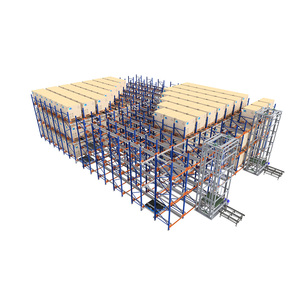
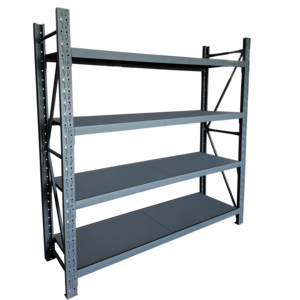
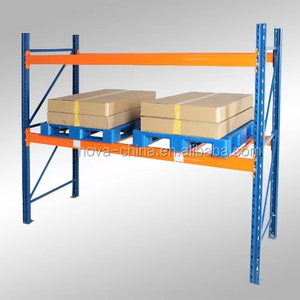
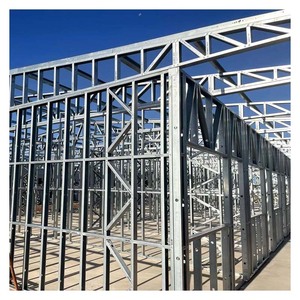
Anatomy of Industrial Drive-Through Racking: Engineering, Physics, and Volumetric Optimization
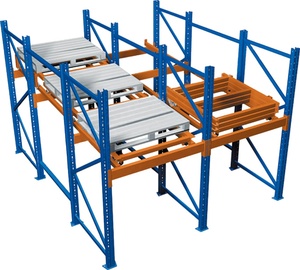
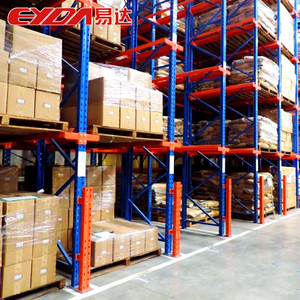
In the competitive landscape of modern warehousing and cold chain logistics, high-density storage configurations are essential to mitigating soaring industrial real estate costs. Among dense storage architectures, Heavy-Duty Drive-Through Racking Systems represent a distinctive pinnacle of structural engineering and logistics throughput. Unlike traditional selective pallet racks that require dedicated operating aisles between every two rows of storage, or standard Drive-In configurations that enforce a strict Last-In, First-Out (LIFO) inventory cycle, Drive-Through racking creates open-ended longitudinal bays accessed from both sides. This enables genuine First-In, First-Out (FIFO) stock rotation while reclaiming up to 75% to 80% of warehouse cubic volume otherwise lost to transit aisles.
However, eliminating structural horizontal shelf beams to allow material handling equipment (such as counterbalance or reach trucks) to drive directly through the interior of the rack matrix introduces severe structural dynamics. Without standard transverse beam ties connecting the upright columns at each pallet level, the entire rack skeleton relies upon cantilevered support arms, continuous structural pallet guide rails, robust top-level portal ties, and heavy longitudinal spine bracing. As one of China's premier heavy-duty rack engineering manufacturers and international exporters, our fabrication standards directly address column torsional buckling, asymmetric dynamic impact loads, and horizontal seismic shear to ensure continuous, fail-safe operation in demanding industrial environments.
Comparative Engineering: Structural Channel vs. Cold-Formed Tubular Profiles
Global logistics procurement teams frequently face the technical dilemma of selecting between cold-rolled open-section steel (such as standard teardrop or slotted roll-formed uprights) and heavy-duty hot-rolled structural steel channels (equivalent to ASTM A36 or GB/T Q355B C-channels). In high-throughput drive-through applications, where forklifts must enter narrow lanes dozens of times per shift, the risk of column impact is significantly amplified. The table below delineates the essential structural distinctions that logistics engineers must evaluate prior to specification:
| Evaluation Parameter | Structural Hot-Rolled Channel | Closed Tubular Steel | Standard Roll-Formed Open Channel |
|---|---|---|---|
| Torsional Rigidity (St. Venant Constant) | Very High (Hot-Rolled C) | Exceptional (360° Welded) | Moderate (Open Lip Profile) |
| Impact Resistance (Forklift Abuse) | Maximum resistance to shearing; ductile | Resistant to torsional twist & deflection | Vulnerable to localized flange crimping |
| Connection Integrity | Grade 8.8 Structural Bolted Assemblies | Engineered Structural Wedge Bolting | Tool-free teardrop or hook-pin connection |
| Corrosion & Freezer Resistance | Superior in deep-freeze (-30°C) with HDG | Requires inner weld seam anti-corrosion | Standard powder coat; requires climate control |
| Optimal Operational Application | Cold Storage, Heavy Beverage, Heavy Industrial | High-Density Drive-Through, Seismic AS/RS | Retail Distribution, Light-Medium FMCG |
In our manufacturing facilities, upright frames destined for heavy-duty drive-through service are fabricated with reinforced structural bases, internal deflector sleeves, and heavy-gauge baseplates anchored via multi-point mechanical chemical expansion studs. In critical impact zones—specifically the entry posts of each drive-through tunnel—we integrate cast-in or anchored wrap-around floor bullnose protectors fabricated from 10mm-thick structural plate, decoupling forklift wheel collisions from the main vertical load-bearing columns.
Future Trends in Heavy-Duty Drive-Through Storage Systems (2025–2030)
How automation, ESG manufacturing mandates, cold chain expansion, and digital structural monitoring are reshaping global procurement criteria.
Hybrid Automation: Shuttle-Ready Conversion
Traditional forklift-driven tunnels are evolving into semi-automated and autonomous ecosystems. Leading procurement groups specify drive-through racking engineered with hybrid rail profiles capable of accepting both standard pallet fork clearances and self-powered 2-way/4-way radio shuttles. This transformation eliminates manual forklift traffic inside the racks, increases handling speeds by 40%, and reduces rack collision incidents to near zero.
Cold Chain Optimization & Cryogenic Steels
Global demand for temperature-controlled pharmaceuticals and blast-frozen foodstuffs has elevated cryogenic structural metallurgy. Future procurement focuses on micro-alloyed silicon-killed steels with verified Charpy V-notch impact toughness tested down to -40°C. Standard commercial steels suffer ductile-to-brittle transitions under rapid sub-zero cooling; our specialized cold-store rack series guarantees impact elasticity and structural integrity in deep freeze.
Digital Structural Twins & Dynamic Telemetry
Enterprise facilities are transitioning to predictive maintenance. Modern drive-through installations are increasingly paired with integrated acoustic-emission sensors, strain gauges, and RFID beam deflection trackers. By transmitting real-time strain data to cloud-based Warehouse Execution Systems (WES), facility operators detect asymmetric settling or unrecorded forklift shocks before structural micro-fractures compromise facility safety.
China's Premier Racking Exporter: Single-Source Accountability from Coil to Port
As an internationally acknowledged leader in intralogistics manufacturing and export, our enterprise merges over five decades of heavy structural engineering heritage with modern smart manufacturing. While brokers and trading entities deliver fragmented components with disputed tolerances, we control every manufacturing milestone across 100,000+ square meters of dedicated production space.
Certified High-Strength Metallurgy
We source prime certified steel coils directly from domestic top-tier mills (Baosteel, Shougang). Every batch is verified via rigorous spectrographic, ultrasonic, and mechanical tensile testing, guaranteeing yield strengths of ≥ 355 N/mm² and full traceability with mill test certificates (MTC) conforming to EN 10204 3.1.
Robotic Forming & Precision Punching
Our facility houses multi-station automated roll-forming lines with continuous in-line CNC punching. Upright perforation pitches are held within microscopic cumulative tolerances of ±0.5mm across an 11-meter length, ensuring that cantilever load brackets lock with total squareness and zero racking play.
Automated Surface Pretreatment & Coating
Our structural finish involves an automated 7-stage chemical degreasing, zinc phosphate passivation, and high-velocity shot blasting to Sa 2.5 cleanliness. We utilize non-toxic, TGIC-free thermosetting electrostatic powders cured at 200°C, producing an anti-scratch 80–120μm coat resistant to salt spray, humidity, and abrasion.
Furthermore, our export logistics engineering department eliminates shipping vulnerabilities. Heavy-duty upright frames and cantilever beams are bound using computerized nesting packaging, marine-grade protective plastic wrapping, anti-vibration timber dunnage, and heavy steel strapping. Every container load plan is pre-simulated in 3D CAD to maximize ocean freight payload capacity, preventing transit scratching and minimizing landed costs per pallet position for overseas engineering projects across Europe, North America, Southeast Asia, and the Middle East.
Frequently Asked Questions: Global Procurement & Engineering Specifications
Clear, direct answers from our Chief Structural Engineers and Global Logistics Directors regarding drive-through system planning, installation, and compliance.
What is the fundamental engineering and operational difference between Drive-In and Drive-Through Racking?
How does Drive-Through racking maintain lateral and longitudinal structural stability without intermediate beams?
What floor slab criteria and building tolerances are required before installation?
Can your drive-through systems be engineered to comply with local seismic building codes (ASCE 7, IBC, Eurocode 8)?
What preventive safety features are recommended to protect the rack investment against lift truck damage?
What documentation and quality verification accompany international export consignments?
Accelerate Your Warehouse Capacity with Expert Engineering
Partner directly with China's leading heavy-duty drive-through racking manufacturer. Connect with our structural engineering team today to receive a complete layout simulation, seismic capacity verification, and factory-direct quotation tailored to your operational specifications.