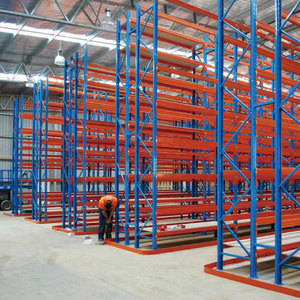
Narrow Aisle Heavy Duty
Factory Supply Cold Rolled Steel Heavy Duty Adjustable Narrow Aisle Racks Stable Bearing Design for Tight Passage Warehouse
Engineered for international distribution hubs, cold storage operations, and 3PL warehouses. Explore our factory-direct heavy-duty double deep and specialty storage systems configured for optimal load bearing and maximum cubic utility.
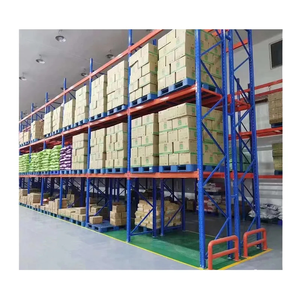
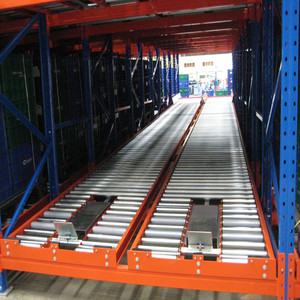
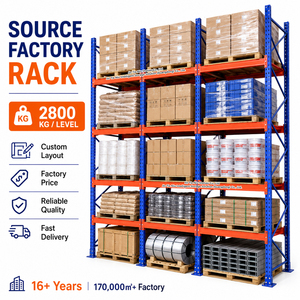

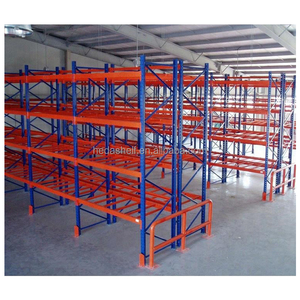
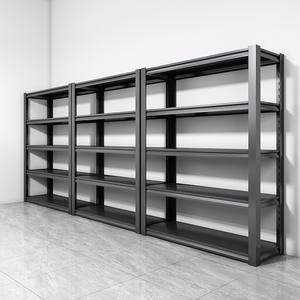
In modern supply chain engineering, balancing storage density against SKU accessibility represents the paramount operational trade-off. Standard selective pallet racking affords 100% immediate selectivity but demands that 60% to 65% of the overall facility footprint be dedicated entirely to operating aisles.
Double deep pallet racking resolves this structural inefficiency by storing pallet loads two depths deep in back-to-back rack runs. By eliminating every second operating aisle, double deep configurations increase warehouse volumetric storage capacity by 30% to 50% compared to single-selective layouts, while retaining a far higher degree of selectivity than deep-lane drive-in or block-stacking methodologies.
As leading China industrial rack exporters, our heavy-duty double deep solutions feature roll-formed omega upright columns engineered with multiple folds to dramatically enhance structural moment resistance and torsional stiffness under extreme static and dynamic pallet loads.
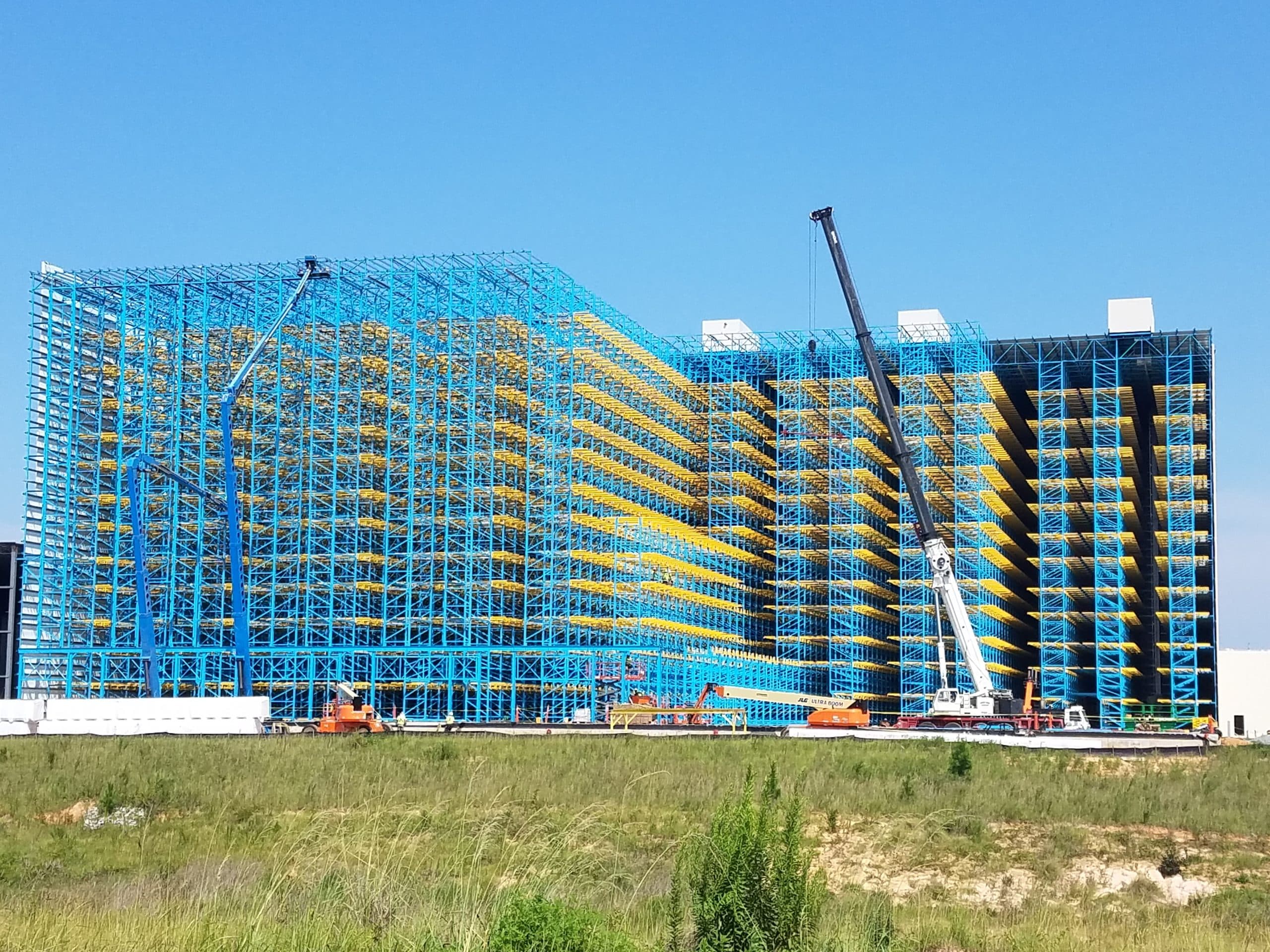
Selecting an optimal intralogistics system requires balancing capital expenditure (CAPEX), floor footprint utilization, inventory rotation protocols (FIFO vs. LIFO), and reach truck fleet economics.
| Racking Architecture | Space Utilization | Pallet Selectivity | Inventory Rotation | Equipment Requirement | Target SKU Velocity |
|---|---|---|---|---|---|
| Double Deep Racking | High (60% - 65%) | ~50% Direct Access | FILO / LIFO per pair | Deep-Reach Pantograph Truck | Medium to High Uniform SKUs |
| Standard Selective Rack | Low (35% - 40%) | 100% Direct Access | Strict FIFO Available | Standard Counterbalance / Reach | High SKU Variety, Fast Picking |
| Drive-In Racking | Very High (75% - 85%) | Low (< 15%) | Strict LIFO | Standard Counterbalance | Bulk Homogeneous Commodities |
| Pallet Flow (Gravity) | Maximum (80% - 90%) | 1 Lane Selectivity | Strict FIFO | Standard Reach / Counterbalance | Perishable, High Throughput |
| VNA (Very Narrow Aisle) | High (55% - 60%) | 100% Direct Access | Strict FIFO | VNA Man-up / Turret Truck | High Ceiling, Premium Real Estate |
*Note: Double deep systems provide the optimum ROI inflection point when warehouse real estate costs are high, but picking throughput demands faster cycle times than drive-in or shuttle channels can deliver.
Send an InquiryBacked by over three decades of steel manufacturing heritage, certified in-house roll-forming mills, automated robotic CO2 shielding weld lines, and complete non-destructive material testing, our Chinese manufacturing plant provides institutional-grade reliability.
From decoiling and high-precision CNC punch tooling to continuous cold roll-forming of uprights, box beams, and step beams, all processes are executed internally. This vertical integration guarantees rigid tolerance control (±0.5mm) and strict batch traceability for every tonnage dispatched.
Racking designs conform rigorously to RMI ANSI MH16.1 (USA), FEM 10.2.02 (Europe), and AS 4084-2023 (Australia). Finite Element Analysis (FEA) is performed on every custom bay profile to calculate exact beam deflection thresholds ($L/200$ to $L/400$) and seismic ground acceleration resistances.
Connectors (3-claw, 4-claw, and 5-claw high-strength interlocking ears) are welded to heavy-duty beams using multi-axis Panasonic robotic stations with CO2 mixed shielding gas, eliminating voids, brittle cold welds, and stress-riser concentration points.
Our automated 7-stage pre-treatment line includes phosphating, chemical cleaning, reverse osmosis water rinses, and Swiss Gema electrostatic powder guns. Coating thickness of 60μm–80μm delivers exceptional salt-spray resistance (>500 hours) for ambient and cold-chain facilities.
We implement 3D container packing simulations to ensure maximum weight/cube utilization in 40ft HQ containers. All upright trusses and beams are packaged with protective corrugated wraps, specialized steel bands, and timber cushioning to prevent transit abrasion.
Global engineering consultancies receive comprehensive BIM Revit 3D families, full structural calculation reports certified by PE (Professional Engineers), installation assembly blueprints, and Mill Test Certificates (MTC EN 10204 3.1) for complete regulatory clearance.
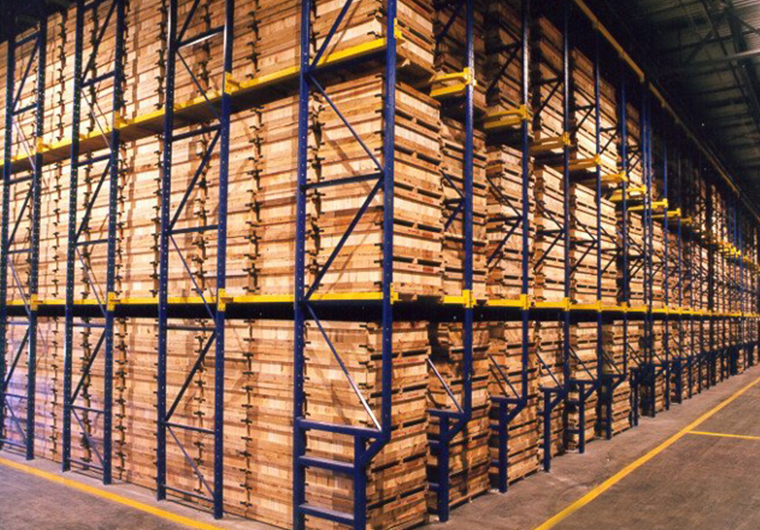
Cold storage warehouses operate with thermal conditioning costs that exceed standard ambient facilities by 300% to 500%. In refrigerated rooms (-18°C to -28°C), wasting cubic space is extraordinarily expensive.
Double deep pallet racking provides the ideal balance between capital investment and storage volume. Unlike automated AS/RS which incurs steep initial Capex, or drive-in systems that suffer severe honeycombing inventory loss, double deep systems permit cold-chain operators to maintain dense batch storage with high-speed pantograph reach trucks.
As logistics infrastructure transitions toward hybrid automation, digitalization, and strict carbon-neutral benchmarks, procurement teams must align specifications with emerging engineering advancements.
The historic barrier to double deep operations—the specialized manual pantograph reach truck operator skill requirement—is being dismantled by autonomous reach forklifts. Computer-vision-guided autonomous reach trucks are executing millimetric dual-depth placement, raising throughput rates while eliminating upright impact damage.
Advancements in micro-alloyed ultra-high-yield steel coils (such as Q355MC and Q460MC) allow engineers to design thinner-gauge profiles with superior torsional strength. This significantly reduces total steel tonnage per pallet position, slashing maritime shipping freight tariffs by up to 18% per container.
Tier-1 mega distribution centers are increasingly specifying integrated IoT strain gauges on critical first-tier uprights and double deep connector nodes. These sensors provide real-time telemetry on localized deflection, overloading, and post-seismic settling, alerting facilities before catastrophic deformation can develop.
International fire marshals and municipal engineering bureaus now demand native IFC and Autodesk Revit models incorporating localized in-rack sprinkler hydraulic pipe drops. Double deep layouts now require coordinated 3D flues (transverse and longitudinal) built natively into digital building models.
Multinational procurement mandates are evaluating Scope 3 embedded carbon emissions. Chinese manufacturers utilizing Electric Arc Furnace (EAF) steel coils recycled from domestic scrap with renewable power validation are winning enterprise tenders across the EU, Australasia, and North America.
Warehouses are future-proofing double deep installations by requesting modular beam profiles compatible with low-profile radio shuttle automation cartridges, allowing seamless conversion from forklift-operated double deep to fully automated dual-depth shuttle storage as volume scales.
To receive precise, production-ready engineering calculations and competitive CIF/FOB quotations from Chinese racking suppliers, procurement officers should compile these fundamental site parameters:
Double deep systems require higher precision alignment than selective bays. Every export shipment incorporates heavy-duty safety components to protect lives and maintain continuous uptime:
Clear, authoritative answers from senior structural engineers and global export logistics specialists to assist in project specification and supplier evaluation.
Double deep racking requires either a pantograph-style reach truck (equipped with a scissor-extending mechanism) or a specialized reach truck fitted with telescopic forks. Standard single-reach trucks cannot place or retrieve loads in the second deep pallet location. When planning aisle widths, pantograph reach trucks typically require an operating aisle of 2.8m to 3.2m depending on pallet depth, mast height, and truck manufacturer specifications.
Double deep operates on a FILO (First-In, Last-Out) basis within each individual two-deep storage channel. The rear pallet cannot be accessed until the front pallet is retrieved. As an operational best practice, warehouse management systems (WMS) assign the two contiguous pallet slots to the same stock-keeping unit (SKU) or production batch. This structure retains 50% immediate pallet selectivity while consolidating inventory storage footprint.
Q235B and Q355B are premier cold-rolled carbon structural steel alloys standardized under GB/T 700 and GB/T 1591 in China. Structurally:
All steel purchased from Tier-1 mills (such as Baosteel or Shougang) includes verified Mill Test Certificates (MTC EN 10204 3.1) stating chemical composition, tensile strength, and Charpy impact values.
Yes. Our engineering division conducts site-specific seismic design calculations in accordance with RMI ANSI MH16.1, IBC (International Building Code), Eurocode 8, and AS 4084. For active seismic regions, double deep uprights are specified with thicker steel walls, enlarged heavy-duty baseplates with multiple chemical/mechanical floor anchors, heavier horizontal/diagonal frame bracing nodes, and high-ductility 4-claw or 5-claw beam connectors.
Standard heavy-duty beam profiles (such as 100mm to 160mm box beams and interlock step beams) easily accommodate from 2,000 kg up to 4,500 kg per pair of beams uniformly distributed load (UDL). In double deep setups, because two pallet positions occupy the depth axis across two pairs of beams, the deflection limit is strictly constrained to $L/200$ (or $L/300$ for automated integration) to prevent pantograph fork dragging upon entry into the rear bay.
All structural upright frames are pre-bundled and strapped with edge-protecting rigid angle paperboards. Beams are palletized in uniform blocks on heavy-duty timber or steel skids, shrink-wrapped with UV-resistant film, and separated with foam cushioning to avoid metal-on-metal abrasion. For long sea voyages across humid equatorial lanes, silica-gel desiccants and VCI (Vapor Corrosion Inhibitor) plastic wrapping are included within enclosed containers.
Partner with China's dedicated heavy-duty racking engineering specialists. Submit your warehouse layout (.CAD or .PDF), pallet specifications, and throughput targets for a prompt, comprehensive engineering layout and turnkey factory quotation.