Featured Industrial Storage & Automation Rack Systems
Engineered for extreme torsional integrity, seismic stability, and harsh environment resistance. Explore our field-proven hot-rolled structural systems, modular boltless racks, and robotic automation integration solutions.
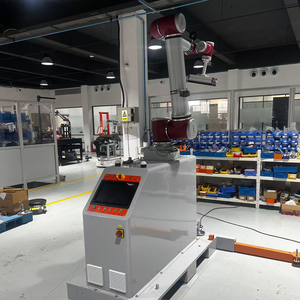
Manufacturer Workstations and Custom Projects JAKA 20KG Automation Robot Palletizer Robot Pallet Stacker
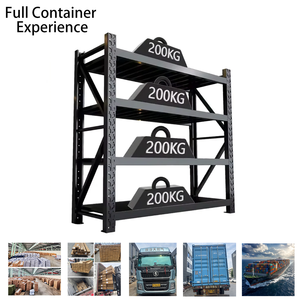
Full Container Export 40HQ Heavy Duty Racking Shelving Units Steel Warehouse Storage Metal Rack For Global Distributors Dealers
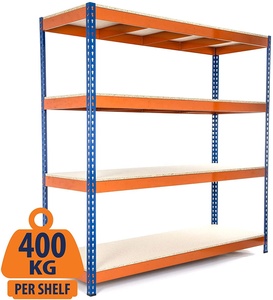
Blue & Orange Shelving & Racking Heavy Duty Shelving
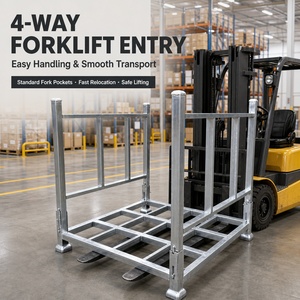
Stacking Rack Stackable Pallet Frame Warehouse Storage Rack Portable Pallet Racking Industrial Rack for Warehouse Storage
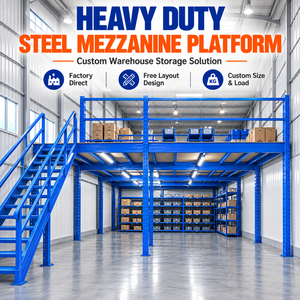
Heavy Duty Steel Mezzanine Floor Rack System With Interlocking Structure For Warehouse Storage
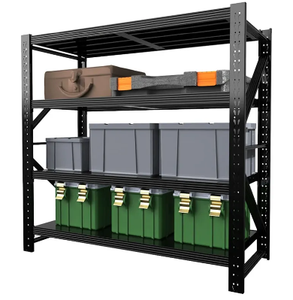
Industrial-grade Modular Steel Chrome Plated Pallet Rack System-250kg/Layer Heavy Duty Boltless Shelving 5-tier Narrow Aisle
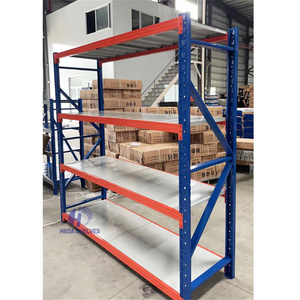
Customized Factory Supply Industrial Workshop Display Shelving Iron Shelves Storage Rack in Warehouse Light Iron Rack
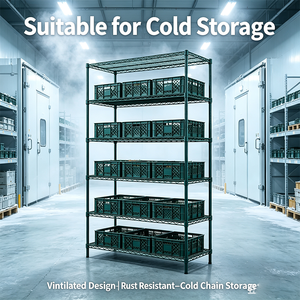
Heavy Duty Rust Resistant Steel Shelves Industrial Warehouse Storage Unit 6 Tier Wire Shelving Rack for Cold Storage
Structural C-Channel vs. Cold Roll-Formed Pallet Racking: An In-Depth Structural Evaluation
When engineering high-bay logistics centers, industrial freezers, or high-throughput distribution hubs, logistics directors face a fundamental material choice: Hot-Rolled Structural Steel Channels (ASTM A36 / Q235B/Q355B equivalent) versus Thin-Walled Cold Roll-Formed Steel Sheet. While roll-formed racking offers lower initial capital costs, structural channel racking provides exceptional lifecycle return on investment (ROI) under severe mechanical impact and seismic loading.
| Engineering Parameter | Structural Pallet Racking (C-Channel) | Cold Roll-Formed Pallet Racking | Operational Impact & Gain |
|---|---|---|---|
| Steel Composition & Thickness | Hot-rolled structural C-channels; flange thickness 3.5mm – 6.0mm+ | Cold-rolled coiled sheet steel; wall thickness 1.5mm – 2.5mm | Structural steel delivers 250% higher resistance to forklift fork punctures and side collisions. |
| Connection Architecture | Heavy-duty bolted connections with Grade 8.8 / ISO 898 structural bolts | Teardrop, slotted, or keyhole clip-in connector pins | Bolted joints eliminate accidental beam dislodgement under violent upward fork impacts. |
| Torsional & Buckling Resistance | Superior open-channel section modulus; immense resistance to twisting | Susceptible to torsional buckling under eccentric vertical loads | Enhanced safety margins in high-bay structures (>12 meters) and high seismic hazard zones. |
| Low-Temperature Ductility | Retains impact notch toughness in deep-freeze environments (-25°C to -40°C) | Prone to cold-embrittlement and micro-cracking at cold-formed corners | Mandatory specification for large-scale refrigerated distribution facilities and cold stores. |
| Maintenance & Lifecycle TCO | Over 25-year design lifespan; near-zero repair downtime | Frequent upright replacement due to forklift corner impacts | TCO calculations reveal structural rack breaks even within 3.5 years in busy hubs. |
Impact Energy Absorption
Structural channel steel dissipates kinetic energy through plastic deformation rather than sudden brittle shear failure. The increased cross-sectional mass of heavy hot-rolled upright corners prevents total collapse when impacted by 5-ton counterbalanced trucks.
RMI ANSI MH16.1 & Seismic FEA
Every structural bay is simulated using finite element analysis (FEA) under dynamic seismic accelerations. Our China engineering office designs full structural frameworks conforming precisely to US RMI ANSI MH16.1, EN 15512, and AS 4084 standards.
Automated AS/RS Interface Precision
Automated storage and retrieval systems demand deflection tolerances under L/500 and beam level alignments within ±1.5mm. Structural racks fabricated on CNC punching lines maintain tight operational tolerances required by modern shuttle cranes.
Future Strategic Trends in Global Pallet Racking Procurement
Global logistics heads, warehouse design consultants, and 3PL procurement executives are reshaping their procurement frameworks. Based on supply chain audits across Europe, North America, and the Asia-Pacific region, several megatrends are driving industrial racking purchases.
Direct Factory OEM Partnerships
Enterprise buyers are transitioning away from secondary brand distributors in favor of direct relationships with tier-1 Chinese manufacturers. Direct factory contracting reduces markup overheads by 22% to 35%, while enabling custom beam section development and mill-test-certified steel traceability.
Container Cubing Optimization
With international ocean freight volatility, procurement teams prioritize modular, nestable designs that maximize 40HQ container volumetric capacity. Custom-nested C-channel structural uprights achieve up to 26 metric tons per container, lowering per-pallet ocean freight costs.
Low-Carbon & Circular Green Steel
Global ESG compliance requires carbon footprint accounting for warehouse infrastructure. Procurement mandates are prioritizing mills using scrap-based Electric Arc Furnaces (EAF) and lead-free thermosetting powder coatings with zero VOC emissions.
Hybrid Structural-Automation Systems
Modern layouts integrate conventional heavy-duty structural racking on lower levels (to absorb forklift traffic impact) with lightweight automated shuttles or picking mezzanines on upper levels, balancing impact resistance with vertical space efficiency.
Technological Innovations in Heavy-Duty Storage Manufacturing
The manufacturing of heavy structural racking has progressed from manual fabrication into a digital, precision-engineered discipline. State-of-the-art facilities leverage automation to guarantee structural reliability and lifecycle resilience.
Automated Robotic Tandem Welding
Full-penetration multi-axis robotic welding cells execute dual-fillet welds uniting base plates, uprights, and beam end connectors. Continuous shielding gas welding prevents porosity, slag inclusion, and localized heat stresses, ensuring joint strength exceeding the base material yield point.
Duplex Surface Treatment Technologies
For chemical storage, coastal yards, and deep freezing, components undergo a dual-protective process: pre-treatment with zirconium phosphate nano-ceramics, followed by heavy-duty zinc-rich primer and electrostatic TGIC polyester powder coating, achieving salt spray resistance exceeding 1,000 hours.
Digital Twin & Sensorized Monitoring
Modern structural installations incorporate digital monitoring options. Fiber-optic strain sensors and multi-axis accelerometers can be embedded within critical rack uprights, streaming real-time deflection and impact data directly to building management systems.
Why Global Distributors & EPC Integrators Choose Us
With decades of engineering dedication, our manufacturing operations maintain full in-house control from raw coil slit-shearing to final automated packaging. By bridging precision Chinese industrial manufacturing with strict international RMI (USA) and FEM (Europe) engineering standards, we provide turnkey accountability.
Single-Source In-House Production
Zero outsourced roll-forming or stamping. All structural channels, tubular columns, teardrop punch profiles, wire decks, and safety accessories are fabricated within our modern automated manufacturing base, guaranteeing consistent metallurgy and dimensional consistency across multi-hundred-ton projects.
Certified Structural PE Stamping
Our in-house structural engineering teams deliver comprehensive structural calculation books, seismic load simulations, slab load verification reports, and CAD/BIM models, supporting smooth municipal permitting across North America, Latin America, Europe, and Australia.
Export Packing & Logistics Precision
Steel parts are bundled with custom-grooved wood dunnage, heavy steel banding, edge guards, and vapor-corrosion inhibitor (VCI) wrapping. We engineer precise loading layouts for every 40HQ container, ensuring zero transit deformation and straightforward site discharge.
Frequently Asked Questions (FAQ) for Structural Racking Procurement
Technical, commercial, and engineering guidance to assist engineering contractors and international procurement officers.
Hot-rolled structural pallet rack is fabricated from solid structural steel C-channels (ASTM A36 or Q235B/Q355B) with heavy wall thicknesses (up to 6mm+) and assembled with high-tensile bolted connections. Roll-formed racking is cold-shaped from light coiled sheet metal (1.5mm to 2.5mm) using clip-in connections. Structural rack provides vastly greater impact protection, torsional rigidity, and durability in harsh, forklift-heavy environments, freezers, and drive-in applications.
All seismic rack structures are custom engineered according to RMI ANSI MH16.1, ASCE 7, or EN 1998 standards. Our engineers analyze site-specific seismic ground accelerations (Ss and S1), soil classification, building occupancy categories, and load spectra. We engineer oversized footplates, high-grade Hilti or Simpson anchor bolts, heavy-duty horizontal back-bracing, and moment-resisting bolted beam connections to maintain elastic frame behavior during earthquake events.
To deliver an optimized layout and certified load rating, please provide: (1) Architectural building layout showing clear ceiling heights, column grids, and dock doors; (2) Pallet dimensions (W × D × H) including product overhang and maximum unit load weights; (3) Material handling equipment models, mast lifting reach, and aisle turning clearance; (4) Floor concrete slab thickness and rebar/compressive strength (psi or MPa); and (5) Environmental conditions (e.g., ambient vs sub-zero cold room temperatures).
Yes. We regularly supply global distributors with replacement frames and expansions that integrate directly with existing installations. With high-precision CNC punch tooling and flexible roll tooling lines, we can match teardrop, 50mm pitch, 75mm European pitch, 76.2mm (3-inch) pitch, structural bolt patterns, and custom beam connector hooks while preserving certified capacity ratings.
Ocean transit subjects cargo to humidity, salinity, and dynamic vessel vibrations. We utilize heavy timber cradles, multi-point high-tensile steel strapping, polyethylene moisture wrap, corner protectors, and desiccant bags. Small hardware items (bolts, safety pins, footplates) are packaged in moisture-proof cartons on heat-treated ISPM-15 export wooden pallets. Container stuffing plans ensure components are nested to eliminate shifting during transit.
For sub-zero cold stores (-20°C to -35°C), we apply specialized low-temperature thermosetting epoxy-polyester coatings that remain flexible without cracking. For outdoor, corrosive, or high-humidity applications, we provide hot-dip galvanization conforming to ASTM A123 or ISO 1461, yielding a sacrificial zinc coating of 60 to 100 microns that protects against rust for over two decades.
Standard fabrication timeframes for 10 to 50 FCL orders average 3 to 5 weeks from approved engineering drawings and deposit receipt. Our automated CNC punching and robotic welding lines process up to 4,500 metric tons of finished steel per month, enabling us to meet tight project hand-over schedules for logistics developers and warehouse contractors.