Engineering Structural Integrity: Sourcing Heavy Duty Steel Coil Racking Systems
Heavy duty steel coil racking systems represent one of the most critical structural investments in metal service centers, automotive stamping facilities, cold-rolling mills, and pipe manufacturing plants. Storing cylindrical steel coils weighing between 5 to 35 metric tons each introduces extreme concentrated point loads, dynamic roll hazards, and structural fatigue risks that standard industrial pallet racking is entirely incapable of supporting safely. As international supply chains optimize cubic utilization and migrate toward automated coil handling, selecting the correct manufacturer in China requires an exhaustive evaluation of material science, seismic bracing, precision roll-forming capabilities, and adherence to international design codes including ANSI MH16.1 (RMI), EN 15512, and AS 4084.
Strategic Engineering Takeaway: Unlike conventional pallet loads distributed across twin horizontal beams, steel coils generate an aggressive outward wedge force. Every coil storage saddle or cradled channel must be engineered with localized finite element analysis (FEA) to eliminate flange curling, weld shear, and beam twisting under static and dynamic forklift placement conditions.
Targeted Heavy Coil Storage Architectural Archetypes
Depending on coil turnover velocity, crane availability, and inventory diversity (master coils vs. slit coils), engineering teams deploy specific racking configurations. Below are the recommended structural archetypes fabricated within our state-of-the-art Chinese manufacturing facilities:
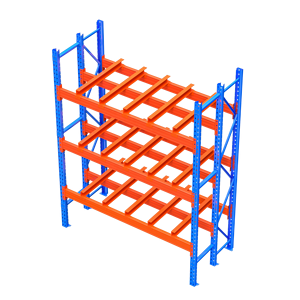
Structural Channel Saddle Racks
Fabricated using heavy hot-rolled structural steel channels (C-channels or I-beams) configured with welded or bolted V-shaped polyurethane-lined saddles. Ideal for high-tonnage master coils (up to 35T per cradle) handled by overhead gantry cranes or heavy industrial forklifts.
Heavy Cantilever Coil Racking
Engineered for high selectivity with clear frontal access. Heavy solid-forged steel arms with integrated end-stops or custom upward taper angles support slit coils, wire coils, and aluminum rings without front column interference, optimizing overhead crane hook paths.
Modular Nesting Coil Stacking Racks
Self-stacking, highly flexible modular steel coil pallets designed with interlocking target pins. These allow flexible 3- to 5-high block stacking without permanent floor anchors, making them exceptional for buffer storage, temporary staging, and international sea-container transit.
Engineering Matrix: Structural Steel Channel vs. Cold-Rolled Formed Systems
Procurement directors often face the trade-off between hot-rolled structural steel profiles and high-gauge cold-roll-formed sections. The comparative analysis below outlines the mechanical performance, structural durability, and economic viability of each methodology for coil weights exceeding 10 metric tons:
| Evaluation Parameter | Hot-Rolled Structural Channel (Q355B / ASTM A572) | High-Gauge Cold-Roll-Formed (Q235B / Cold-Drawn) |
|---|---|---|
| Impact Resistance | Exceptional. High section thickness (up to 12.0 mm) resists severe forklift carriage impact without torsional yielding. | Moderate to High. Requires dedicated heavy-duty upright column guards and heavy base-plate boxing. |
| Max Bay Weight Capacity | Up to 40,000 kg (40 MT) per bay; engineered for multi-tier heavy master steel coils. | Typically limited to 12,000 kg (12 MT) total bay load; suitable for light slit coils and wire spools. |
| Connection Design | Grade 8.8 or 10.9 high-tensile structural bolted connections; total structural rigidity with zero dislodgement risk. | Interlocking teardrop or diamond slot hook connectors secured with mechanical safety pins. |
| Cost & Freight Optimization | Higher initial raw material cost, but nearly zero lifecycle replacement and repair overhead. | Highly cost-effective manufacturing, reduced structural weight, and optimized shipping container loading. |
| Ideal Applications | Steel service centers, automotive stamping, heavy coil foundries, automated crane bays. | Mid-duty manufacturing, sheet metal fabricators, maintenance repair staging, and distribution hubs. |
Future Sourcing Trends in Coil Storage: 2026–2030 Transformation
The global steel warehousing landscape is moving past passive static storage toward digitally integrated, hazard-free heavy storage ecosystems. Global B2B buyers should anticipate and integrate these four technological vectors into their current engineering procurement requests:
Automated Heavy-Payload AS/RS Integration
Traditional forklift-driven coil movement is rapidly being superseded by Automated Storage and Retrieval Systems (AS/RS) utilizing custom heavy coil shuttles and bridge-style stacker cranes. Racking tolerances must contract from ±3.0mm to less than ±1.0mm per bay to facilitate automated optical sensor positioning.
Thermoplastic Elastomer (TPE) Liners
High-finish stainless steel, automotive-grade exposed skin panels, and prepainted galvanized coils reject bare metal-on-metal contact. Future-ready racking specifications demand modular, field-replaceable engineered polyurethane or cast-nylon saddle shoes that permanently prevent pressure indentation and scratches.
IoT Real-Time Structural Health Monitoring
Deploying strain gauges and three-axis seismic accelerometer nodes onto the most heavily loaded uprights enables facility managers to track cumulative micro-strain, floor settlement, and unauthorized impact incidents via wireless mesh networks before critical mechanical collapse occurs.
Manufacturing Eminence: Why Source From Our Chinese Facilities?
As an industry-leading manufacturer with continuous cold-roll forming, automated laser cutting, and robotic welding lines, our engineering approach guarantees absolute mechanical reliability and regulatory conformance for every export project:
-
Direct Mill-Source Certified Structural Steel: We source certified prime Q235B and Q355B coils directly from Baosteel and Shougang Group. Every batch includes full 3.1 Mill Test Certificates (MTC) documenting tensile strength, yield strength, and Charpy V-notch impact testing.
-
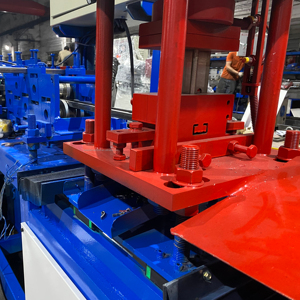
Automated In-House Roll Forming & Robotic Welding: Equipped with advanced continuous roll-forming lines (featuring gear-driven PLC motors and high-precision tooling), our components guarantee tight dimensional tolerances, structural straightness, and weld penetration that exceeds AWS D1.1 standards.
-
Superior Surface Finishing (Powder Coating & HDG): Complete multi-stage pre-treatment (shot blasting to Sa 2.5, acid pickling, and phosphating) followed by architectural-grade electrostatic powder coating or Hot-Dip Galvanization according to ASTM A123 ensures 20+ years of rust prevention in hostile industrial climates.
-
PE-Certified Engineering Calculations & Seismic Design: We supply full finite element analysis (FEA) reports, anchor shear calculations, and structural layouts stamped to local building codes, including US IBC, Eurocode 3, and Australian seismic guidelines.
Frequently Asked Questions by Industrial Sourcing Teams
Direct answers from our senior structural engineering team addressing weight thresholds, floor loading, and safety verification:
What critical data is required to engineer a safe steel coil racking system?
To provide precise structural calculations, we require: (1) Minimum and maximum coil outer diameter (OD), inner diameter (ID), and width; (2) Maximum coil weight; (3) Handling method (overhead crane with C-hook/tongs or forklift with coil ram); (4) Facility concrete slab thickness, compressive strength (psi or MPa), and rebar layout; (5) Seismic zone classification and local building design code requirements.
How does the design prevent coil movement or rolling within the storage bay?
Our systems utilize precision-machined heavy structural V-saddles engineered to a precise geometric angle (typically between 120° and 140°) designed around the specific coil diameter range. High-durometer polyurethane pads prevent rolling, reduce slip coefficients, and absorb impact shocks during loading. Additionally, welded mechanical end-stops act as positive physical barriers.
Can standard warehouse concrete slabs support heavy duty coil racks?
Standard warehouse slabs (150mm to 200mm unreinforced) often cannot handle concentrated point loads from 20-ton or 30-ton coil bays. Our engineers design oversized heavy structural base plates (often 20mm to 35mm thick) with multiple heavy-gauge chemical or mechanical anchor bolts to disperse column point loads safely across the slab's punching shear envelope. In extreme instances, isolated footings are specified.
How are high-value steel and aluminum coils protected against surface marking?
For sensitive cold-rolled, galvanized, polished stainless, or aluminum materials, all contact surfaces are lined with engineered high-density polyurethane cushions (Shore 85A to 95A durometer) or solid Ultra-High-Molecular-Weight Polyethylene (UHMW-PE). These liners prevent metal-to-metal scratching, eliminate galvanic corrosion between dissimilar alloys, and are mechanically secured for simple field replacement.
What are the lead times and container loading strategies for export projects?
Standard production lead times range between 25 to 35 calendar days following drawing approval. Components are bundled using custom steel-banded dunnage and heavy lifting lugs to ensure rapid unloading via crane or forklift at destination ports. Heavy structural items are distributed evenly across 40ft High Cube or Open Top containers to maximize metric tonnage allowances without exceeding legal road weight limits.