Factory Direct Catalog
High-Performance Heavy Duty Stack Racking Systems
Engineered to comply with international RMI, CE, and ISO standards, our versatile storage racking solutions optimize high-density footprint efficiency and deliver maximum structural load resilience.
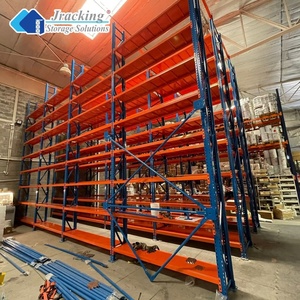
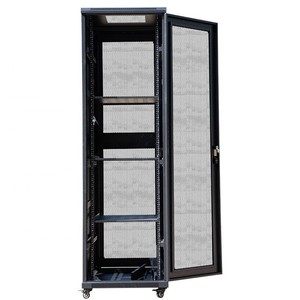
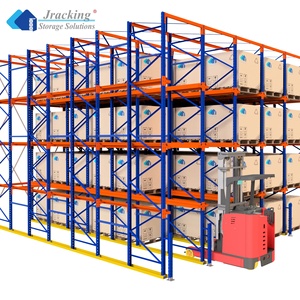
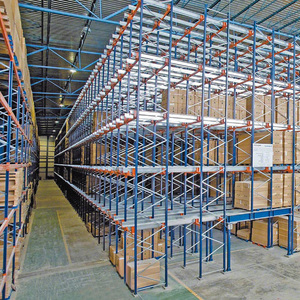
Industrial White Paper
Engineering Architecture: Structural Integrity of Heavy Duty Stack Racking
A comprehensive examination of steel yield limits, structural channel durability, and seismic considerations in modern warehouse material handling systems.
In high-throughput distribution environments, specifying heavy duty stack racking goes well beyond selecting dimensions from a supplier catalog. Logistics engineers, plant facility managers, and procurement officers face increasing demands for volumetric optimization, dynamic forklift impact absorption, and stringent seismic compliance. As global supply chain networks continue to shift toward concentrated, automated, and vertical warehousing footprints, the engineering criteria for industrial rack frameworks must satisfy both static and dynamic stress thresholds under maximum operational stress.
Industrial stacking systems generally divide into two major metallurgical categories: cold-roll formed steel structures and structural hot-rolled channel systems. Cold-rolled steel, manufactured by profiling coiled continuous sheet steel through tandem rolling stations at ambient temperatures, delivers exceptional strength-to-weight ratios, dimensional precision, and cost efficiencies for selective, double-deep, and drive-in arrangements. In contrast, structural steel racking—such as heavy C-channel beams and uprights—features significantly heavier flange thicknesses that withstand repeated, brutal impacts from lift trucks in dense staging docks, heavy manufacturing cradles, and sub-zero cold storage operations.
Critical Material Properties and Seismic Compliance (RMI & EN Standards)
When selecting a qualified manufacturing factory in China, verifying structural integrity begins with raw material tractability. Elite production facilities utilize certified structural steels—such as high-tensile Q235B, Q355B, and ASTM A572 Grade 50. Every production heat undergoes continuous tensile tests, Charpy V-notch impact tests, and elongation assessments to confirm that cross-sections endure rated static load limits without plastic deformation.
Furthermore, contemporary seismic design principles (conforming to ANSI MH16.1 / RMI standards and European EN 15512 specifications) require multi-directional analysis of rack frames. Racking installations act as semi-rigid structures. Under seismic excitation, connection stiffness (the moment-rotation behavior of the beam-to-column locking connection) dictates structural drift and horizontal frame displacement. Premium factories engineer proprietary safety-pin locks, reinforced footplates with dual anchor holes, and heavy vertical bracing patterns designed to absorb energy and prevent progressive structural collapse during extreme seismic events.
Structural Q355B Formulation
Engineered cold-formed and structural channel members offering yield strengths exceeding 355 MPa, ensuring resilient resistance against point deflection and repeated warehouse loading cycles.
Robotic MIG & TIG Welding
Automated multi-axis robotic welding cells guarantee continuous, deep penetration welds across end-plate connect brackets, eliminating micro-fissures and heat-affected zone structural weak points.
Electrostatically Cured Finishes
Multi-stage phosphate pre-treatment followed by thermoset epoxy-polyester electrostatic powder coating provides extreme surface hardness, corrosion resistance, and cold-room resilience.
Strategic Forecast 2026–2032
Future Trends in Global Heavy Duty Stack Racking Procurement
Analysis of emerging material handling paradigms, smart automation synergy, sustainable metallurgy, and end-to-end supply chain resilience.
The procurement landscape for material handling infrastructure is undergoing transformative restructuring. Industrial buyers are shifting from transactional equipment buying to consultative lifecycle partnerships. Driven by escalating commercial real estate costs, severe labor constraints, and the explosive expansion of cold-chain e-commerce logistics, several major shifts will dictate stacking and pallet rack specifications over the next decade:
1. Convergence of Modular Stacking and Robotic AS/RS Infrastructure
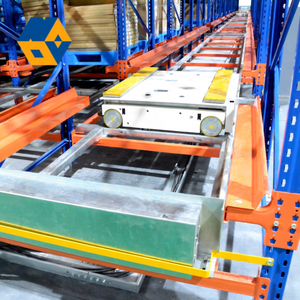
Traditional static pallet racks are rapidly being re-engineered to interface with automated systems. Rather than choosing between rigid automated storage and retrieval systems (AS/RS) or manual selective racking, enterprise hubs are deploying hybrid solutions. High-density radio shuttle carts (two-way and four-way runners) operating inside heavy-duty channel lanes eliminate forklift entry into racks. This convergence minimizes mast collision damage, reduces transit cycle times by up to 60%, and increases vertical density up to 85% of warehouse clear height.
2. Demands for Circular Supply Chains and Demountable Modular Stacking
In response to volatile inventory swings and seasonal warehousing contracts, third-party logistics (3PL) operators require adaptable storage assets. Modular stack racks (such as post-and-cradle units, tire racks, and collapsible auto part containers) represent the fastest-growing procurement category. These demountable units allow facilities to assemble temporary high-density staging during seasonal peaks, nest the empty units to reclaim up to 80% of warehouse floor space during off-peak windows, and ship goods directly on racks without secondary repalletization.
3. Green Steel Manufacturing and Carbon Border Adjustments (CBAM)
International industrial procurement teams in Europe and North America now prioritize carbon accounting. Chinese tier-1 rack manufacturers are actively adopting electric arc furnace (EAF) low-carbon steel profiles, solar-powered powder coating lines, and closed-loop water treatment facilities. Forward-looking procurement directors will continue selecting manufacturers capable of providing transparent Environmental Product Declarations (EPDs) and verified life-cycle carbon tracking data.
Procurement Matrix
Engineering Selection Guide: Pallet Rack Systems Compared
Cross-evaluate load density, SKU selectivity, and operational velocity to determine the optimal framework for your logistics footprint.
| Racking System Type | Storage Density | Pallet Selectivity | Inventory Protocol | Typical Load Rating | Primary Industrial Use Case |
|---|---|---|---|---|---|
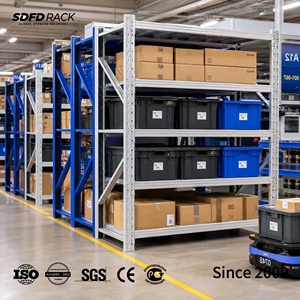
| Heavy Duty Selective Rack | Moderate | 100% Direct Access | FIFO / LIFO | 1,000 – 4,500 kg / beam level | High SKU distribution, retail fulfillment, general FMCG hubs |
| Automatic Radio Shuttle System | Maximum (Ultra-Dense) | By Lane Depth | Flexible FIFO / LIFO | 500 – 2,000 kg / pallet unit | Cold storage, beverage manufacturing, automated 3PL distribution |
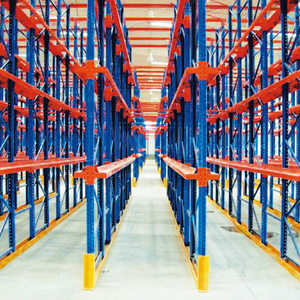
| Drive-In / Drive-Through Rack | High Density | Low (Last In First Out) | LIFO (Drive-In) / FIFO | 1,000 – 2,500 kg / pallet unit | Homogenous batch storage, seasonal buffers, freezer storage |
| Modular Industrial Stack Racks | Dynamic / Scalable | Block Stacking | Bulk Staging | 1,000 – 3,000 kg / basket | Automotive subassemblies, textile rolls, seasonal overflow |
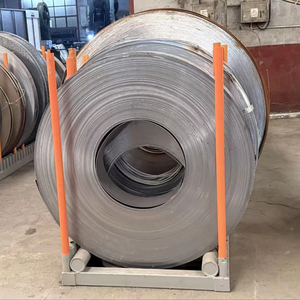
| Heavy Duty Steel Coil Cradle Rack | High Point-Load | Designated Cradle Access | Controlled Retrieval | 5,000 – 30,000 kg / cradle | Steel roll handling, heavy stamping facilities, raw metallurgy |
Factory Excellence
Why Partner with Our China Manufacturing Facility
Direct manufacturer capabilities, continuous structural testing, and custom engineering support built on 35+ years of industrial steel fabrication.
Fully In-House Manufacturing
From raw coil uncoiling, automatic roll forming, and laser beam hole punching to robotic welding and automated powder coating, every stage is executed in-house for uncompromised quality.
Certified Engineering & PE Stamps
Our dedicated structural engineering team provides complete AutoCAD layouts, 3D structural simulations, finite element analysis (FEA), and site-specific seismic calculation packages.
Export Packaging & Ocean Protection
All upright frames and beams are strapped with steel bands, wrapped in heavy protective PE bubble film, and palletized with wooden dunnage to eliminate transit rust, scraping, and maritime deformation.
Knowledge Base
Frequently Asked Questions: Heavy Duty Stack Racking
Detailed technical, commercial, and operational answers addressing international procurement, safety compliance, and installation.
What is the difference between structural steel racking and cold-formed roll-formed racking?
Roll-formed pallet racking is manufactured from continuous coils of sheet steel shaped through roll-forming lines at room temperature. It features modular teardrop or keyed slot connections for rapid, toolless beam reconfiguration. It provides exceptional cost-efficiency for standard warehousing. Structural steel racking uses hot-rolled structural C-channels with bolted connections, offering significantly thicker flanges that endure severe forklift impacts in high-traffic hubs, drive-in systems, and harsh sub-zero freezer facilities.
What specific engineering data is required before requesting an accurate quotation?
To provide a turnkey layout and formal engineering estimate, our team requires: (1) Warehouse architectural drawings showing clear ceiling height, building column grid, fire egress, and overhead door locations; (2) Pallet dimensions (width, depth, overall loaded height); (3) Maximum unit load weight per pallet; (4) Forklift specifications including maximum mast lift height, turning radius, and minimum aisle width requirements; (5) Floor slab thickness, compressive strength, and geotechnical data; and (6) Local seismic acceleration zone requirements (Ss and S1 values).
How do you ensure structural load safety and weld reliability during mass production?
Quality assurance is embedded in our ISO 9001 certified manufacturing workflow. Every raw steel delivery is accompanied by mill test certificates (MTC) and re-verified via in-house spectrometer testing. Welded connector brackets undergo automated optical inspection and non-destructive ultrasonic testing (NDT). Completed beam profiles and upright frames are subjected to routine cyclic destruction testing on calibrated hydraulic load test rigs to ensure a minimum safety factor of 1.5 to 1.65 in compliance with RMI and EN 15512 safety codes.
Can your factory support custom dimensions, specialized finishes, and OEM/ODM private labeling?
Yes. Over 65% of our production output consists of customized OEM/ODM projects for global rack integrators, distributors, and logistics conglomerates. We offer custom beam section tooling, customized hole-pitch configurations (e.g., 50mm, 75mm, 76.2mm / 3-inch pitches), custom RAL powder coat matching, and hot-dip galvanizing (HDG) conforming to ASTM A123 for extreme outdoor, corrosive, or marine staging applications.
What is the typical manufacturing lead time and global shipping arrangement?
Standard containerized orders (2 to 5 standard 40ft High Cube containers) carry a manufacturing lead time of 20 to 30 business days following technical drawing sign-off. High-volume project releases can be staged across sequential vessel sailings. Our dedicated international logistics department handles FOB, CIF, DDU, and DDP terms, coordinating vessel booking, export customs documentation, and container load optimization to maximize cubic container fill rates without structural transit damage.
How do radio shuttle stacking systems improve ROI compared to conventional drive-in racks?
While drive-in racking provides high density, it requires forklift trucks to navigate deep inside structural rack lanes, resulting in slow pallet handling cycles and frequent upright collisions. Automatic radio shuttle systems employ an automated runner vehicle that navigates beneath pallets on precision rails to retrieve and deposit loads. This eliminates lift truck entry into storage lanes, reduces product and equipment damage by over 80%, increases throughput velocity by up to 3x, and drastically lowers labor and equipment maintenance overhead, achieving full capital payback within 18 to 24 months.
Consult with Our Structural Racking Engineers
Send your warehouse floor plans or pallet specification sheets today. Our engineering department will deliver a preliminary 2D/3D CAD layout, structural capacity assessment, and direct factory pricing within 24 hours.