Standard Heavy Duty
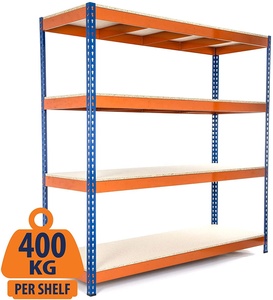
Blue & Orange Shelving & Racking Heavy Duty Shelving
Up to 4,000 kg/Beam
Epoxy Coated
Adjustable 75mm Pitch
Manufactured strictly according to international structural standards (RMI ANSI MH16.1, EN 15512, and AS4084) using certified prime cold-rolled steel grades.
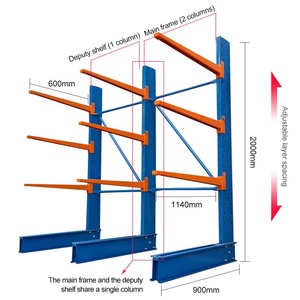
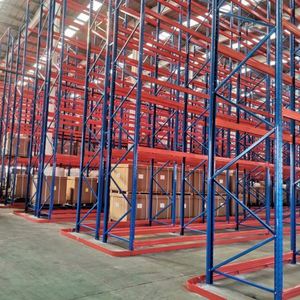
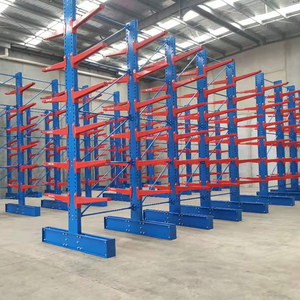
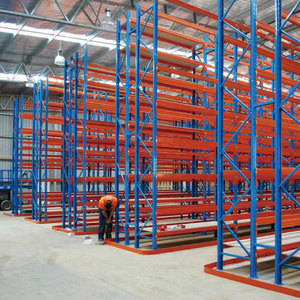
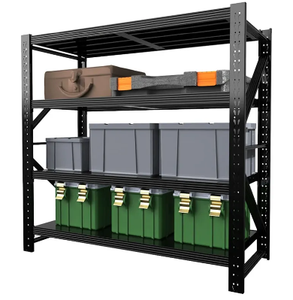
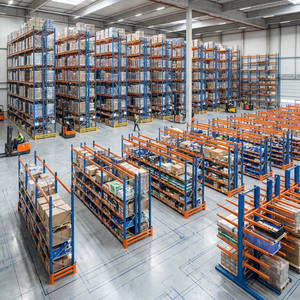
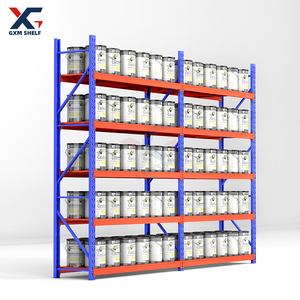
A rigorous engineering comparison dissecting the volumetric efficiency, load mechanics, and floor guide tolerances between standard selective and VNA structures.
Standard counterbalanced forklift aisles mandate 3,500 mm to 4,200 mm of clear passageway. Narrow aisle racking compresses dynamic operations down to 1,600 mm – 1,800 mm, slashing dead floor space by up to 50% while unlocking unmatched volumetric cubing.
Operating high-elevation trucks inside tight corridors demands zero mechanical sway. VNA racking integrates floor-level mechanical steel guidance angles or sub-floor low-frequency inductive wire guidance systems to ensure millimetric steering precision.
Because VNA structures regularly exceed heights of 12 to 16 meters, vertical frame deflection must be stringently controlled. Upright frames are cold-roll-formed with continuous multi-bend omega profiles, connected by solid bolted trusses and heavy baseplates.
Evaluate critical engineering parameters to accurately size capital expenditure versus long-term footprint yield.
| System Type | Aisle Clear Width | Floor Space Utilization | Vertical Clear Limit | Pallet Selectivity | Guidance Requirement |
|---|---|---|---|---|---|
| Heavy Duty Narrow Aisle (VNA) | 1,500 mm – 1,800 mm | Up to 65% – 70% | Up to 16.5 Meters | 100% Direct Access | Mechanical Rail / Inductive Wire |
| Standard Wide Aisle Selective | 3,200 mm – 3,800 mm | 35% – 40% | Up to 9.0 Meters | 100% Direct Access | None (Free Navigating) |
| Double Deep Pallet Racking | 3,000 mm – 3,400 mm | 50% – 55% | Up to 10.0 Meters | 50% Direct Access (LIFO) | Pantograph Reach Mechanism |
| Drive-In High Density | N/A (Drive-in Lanes) | Up to 75% | Up to 11.0 Meters | Low Selectivity (LIFO) | Internal Floor Pallet Rails |
| Automated AS/RS Crane System | 1,400 mm – 1,600 mm | 85%+ Maximum Volume | Up to 40+ Meters | 100% System Governed | Fixed High-Precision Floor Rails |
Where intralogistics procurement is heading: automated fleet retrofitting, carbon accounting, and high-bay modularity.
Global logistics hubs are actively pivoting from manual man-up trucks to autonomous mobile robots (AMRs) fitted with high-bay trilateral swing forks. Modern VNA racks purchased today require robotic-grade plumb line tolerances (1:1000 vertical deflection thresholds) and integrated optical reflector mounting points.
International building codes (IBC 2024 and Eurocode 3) now impose stringent seismic damping standards for racks exceeding 10 meters. Procurement teams increasingly reject standard catalog selections in favor of FEA (Finite Element Analysis) certified base anchors, dual-shear safety pins, and engineered cross-bracing frameworks.
With cross-border carbon border adjustment mechanisms (CBAM) taking hold across Europe and North America, leading Tier-1 Chinese mills are shifting to scrap-based electric arc furnace (EAF) steel and zero-VOC heavy-duty powder coating formulations that endure harsh cold storage (-30°C) cycles without embrittlement.
Combining heavy structural steel production capability with precision automated continuous roll-forming lines.
Over 24 automatic multi-stage roll-forming lines capable of stamping, punching, and forming uprights up to 18 meters in single lengths without splices.
Every coil is sourced directly from premier steel makers (Baosteel/Shougang) with mill test certificates guaranteeing Q235B and Q355B mechanical yield strengths.
Beam end connectors and baseplates are assembled on automated Panasonic/KUKA robotic welding cells, ensuring complete weld penetration and zero porosity.
Engineered, calculated, and documented to satisfy RMI ANSI MH16.1 (USA), AS4084 (Australia), FEM 10.2.02, and EN 15512 (European Union) testing protocols.
Clear, direct, and actionable technical guidance designed for global warehouse managers, EPC contractors, and procurement executives.
Due to mast height exceeding 12m, dynamic wheel loads from turret trucks can exceed 100 kN. Warehouse concrete slabs must meet DIN 15185 or ASTM F-min 75/100 flatness and levelness standards, with a minimum slab thickness of 200 mm – 250 mm and concrete compressive strength of C25/30 or C30/37.
Mechanical steel guide rails (usually 75x50x6mm angle iron mounted on floor anchors) deliver absolute mechanical protection against truck collision and work immediately upon installation. Inductive sub-floor wire guidance creates a cleaner aesthetic and accommodates wider pallet outrigger tolerances, but requires precise floor slot sawing and electronic transmitter commissioning.
Standard 40ft High Cube (40HC) shipping containers have an internal length limit of 11.8 meters. For uprights over 11.5 meters, our factories engineer heavy-duty structural internal splice joints (tested to 100% of nominal upright moment capacity) or arrange breakbulk / flat-rack sea freight for uninterrupted single-span frames.
We provide full structural engineering calculation books signed by certified structural engineers, AutoCAD floor plans, assembly detail drawings, 3.1 Material Test Reports (MTRs) for tensile and chemical analysis, and third-party ISO 9001, CE, and RMI compliance declarations.