China Best Heavy Duty Multi Tier Racking Manufacturers & Manufacturer Engineering
Precision-engineered multi-tier racking, industrial mezzanine platforms, and automated structural storage architectures built to international RMI and FEM safety thresholds.
Factory-Direct High-Density Storage
Engineered Heavy Duty Racking & Multi-Tier Systems
Discover rigorously tested industrial storage lines designed to optimize cubic utilization, accelerate picking workflows, and endure heavy forklift duty cycles.
Industry Whitepaper & Strategic Procurement Analysis
Engineering Heavy Duty Multi-Tier Racking: High-Density Cubic Optimization for Global Supply Chains
In modern supply chain engineering, land acquisition costs and warehouse facility leasing rates have transformed vertical volume into the most critical metric in distribution real estate. Finding a qualified China best heavy duty multi tier racking manufacturer is no longer solely an exercise in purchasing steel roll-formed profiles at favorable prices. Global logistics directors, third-party logistics (3PL) operators, and automated fulfillment infrastructure engineers now treat heavy-duty multi-tier racking systems as structural, load-bearing building foundations that require structural integrity, seismic safety modeling, ergonomic picking flow, and robotic integration capabilities.
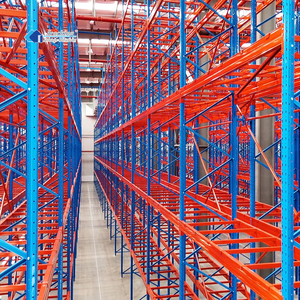
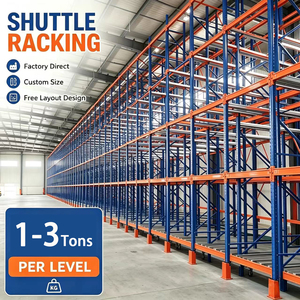
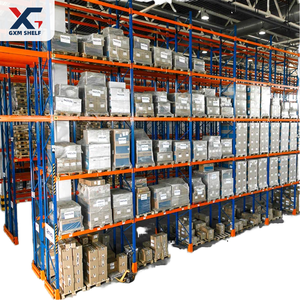
Industrial multi-tier racking systems—commonly engineered as rack-supported multi-level picking towers, heavy-duty industrial work platforms, or integrated catwalk shelving arrays—multiply active floor storage capacity without requiring additional building footprint. By utilizing high-tensile hot-rolled or cold-rolled structural steel, these multi-level systems safely support pallet loads exceeding 3,000 kg per level, alongside simultaneous dynamic deck live loads of 300 kg/m² to over 1,000 kg/m² across elevated catwalk walkways, heavy-duty wire mesh decking, and steel grating lanes.
Vertical Volume Multiplying
Converts unused overhead space into two, three, or four operational picking tiers, elevating facility footprint efficiency by up to 250% compared to traditional single-tier layouts.
FEA-Validated Seismic Safety
Structural modeling via finite element analysis (FEA) compliant with ANSI MH16.1, AS4084-2023, and FEM 10.2.02 seismic displacement constraints.
Automation & AMR Readiness
Heavy-gauge floor profiles, precision deck deflection tolerances (<L/200), and integrated high-speed conveyor tie-ins designed to support continuous autonomous mobile robot traffic.
Architectural Differentiation
Technical Comparison: Multi-Tier Racking vs. Alternative High-Density Systems
Selecting the appropriate industrial storage racking matrix requires balancing SKU selectivity against inventory rotation profiles, picking automation, and total capital expenditure. The table below outlines how multi-tier structural architectures compare against high-density alternatives.
System Architecture
Volumetric Efficiency
SKU Direct Selectivity
Picking Velocity
Handling Equipment Required
Typical Application Suitability
Heavy Duty Multi-Tier Racking
Extreme (90–95%)
100% at Each Active Tier
Ultra-High (Simultaneous Multi-Level)
Pedestrian, Order Pickers, Vertical Lifts
E-commerce fulfillment, spare parts, high-SKU distribution
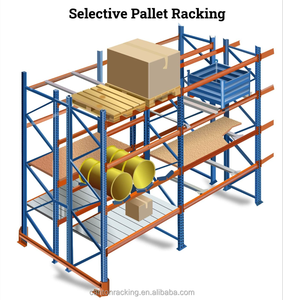
Standard Selective Pallet Rack
Moderate (50–60%)
100% Direct Access
Moderate (Aisle Congestion Dependent)
Standard Counterbalance, Reach Trucks
General purpose warehousing, mixed load distribution
The global multi-tier racking manufacturing sector is undergoing fundamental engineering transitions driven by robotics, workplace ergonomics, and ESG compliance. Buyers must align their technical procurement briefs with these developments:
1. Structural Hybridization for AMRs
Multi-tier racking systems increasingly incorporate reinforced floor decks designed for autonomous mobile picking robots (AMRs). Floor platforms must satisfy deflection limits of L/300 to L/400 to prevent optical sensor drift, featuring wear-resistant non-slip electrostatic dissipative (ESD) deck overlays.
2. Low-VOC & Zero-Heavy-Metal Finishes
Eco-friendly polyester powder coatings with zero VOC emissions and heavy-metal-free formulas have become standard. In cold storage and pharmaceutical logistics, antimicrobial and corrosion-resistant powder coatings help ensure hygiene and longevity in humid or sub-zero environments.
3. Pre-Engineered Modular Expansion
Modern international procurement specifications emphasize boltless, weld-free site assembly. Standardized punch patterns (such as 50mm, 75mm, or 76.2mm pitch) allow operators to reconfigure beam tiers, catwalks, or staircases without specialized on-site metal fabrication.
Manufacturer Provenance & Capabilities
Why Partner with a Leading Chinese Heavy Duty Multi-Tier Racking Manufacturer?
Our manufacturing facilities unite over five decades of industrial rack engineering principles with automated, high-precision roll-forming technology. Rather than serving merely as a contract fabricator, our engineering team acts as a single-source solutions provider—from structural calculations and seismic validation to custom tooling, automated manufacturing, and export logistics.
Certified Mill Steel Sourcing
We source prime hot-rolled and cold-rolled coil steel exclusively from accredited primary mills (Q235B, Q355B, and high-tensile structural grades). Every production heat is traceable via full mill test certificates (EN 10204 Type 3.1) documenting tensile strength, yield limits, and chemical composition.
Continuous Automated Production
Our infrastructure features 24-stand automated continuous roll-forming lines, computerized optical punching beds, robotic welding stations, and fully enclosed automated powder-coating lines. This manufacturing setup ensures dimensional tolerances within ±0.5 mm across multi-meter upright columns.
Global Engineering Compliance
Our engineering division designs systems to meet RMI ANSI MH16.1 (USA), AS4084-2023 (Australia), and EN 15512 / FEM 10.2.02 (Europe) codes. We provide certified calculations, connection moment analyses, and complete 3D BIM/CAD project documentation.
What floor loading parameters are necessary for multi-tier rack engineering?
Uprights in a multi-tier mezzanine system concentrate significant static dead weight and live dynamic loads onto individual baseplates. We evaluate your concrete floor slab thickness (typically 150mm–250mm), compressive strength (f'c ≥ 25–30 MPa), subgrade modulus, and reinforcement mesh. When point loads exceed slab shear limits, we engineer oversized baseplates or tie-in spreader beams to safely distribute weight.
How are fire safety and NFPA sprinkler standards integrated into multi-tier walkways?
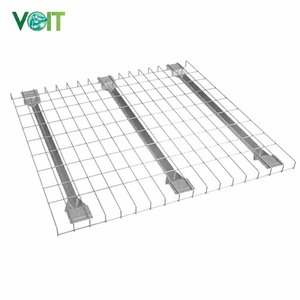
In multi-tier structures, local building and fire regulations (such as NFPA 13) often require at least 50% open area across catwalk decks to ensure water penetration from ceiling sprinklers. We fabricate heavy-duty open-mesh steel grating, punched steel decks, or wire mesh decking tailored to meet local flammability and water-dispersal codes, and can incorporate intermediate in-rack sprinkler pipe supports into the framework.
Can multi-tier racking support automated vertical conveyors and spiral chutes?
Yes. Multi-tier platforms are routinely designed to accommodate vertical reciprocating conveyors (VRCs), parcel spirals, bin lifts, and picking chutes. Our engineers incorporate dedicated dynamic load margins, structural stiffener braces, and floor cutouts with continuous kickplates and guard rails (minimum 1,100mm height) to ensure workplace safety.
How does container packing and export bundling protect finished steel during ocean transit?
Long upright frames, structural beams, and catwalk panels undergo bundled strapping with protective plastic corner guards, high-strength timber dunnage, and moisture-absorbing desiccant packs within shipping containers. Fasteners, baseplates, shims, safety locks, and accessories are systematically crated and barcoded to ensure smooth on-site staging and installation.
Maximize Your Facility's Cubic Storage Capacity
Connect with our structural engineering team to request detailed layout proposals, custom CAD blueprints, and direct factory pricing for your upcoming heavy-duty multi-tier racking installation.