Engineered Heavy-Duty Warehouse Storage Portfolio
Explore our certified range of high-tolerance automated pallet runners, structural steel coil racks, modular cantilever arms, and boltless rivet configurations designed for heavy logistics and smart distribution hubs.
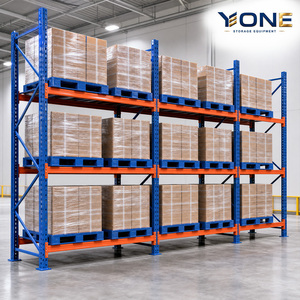
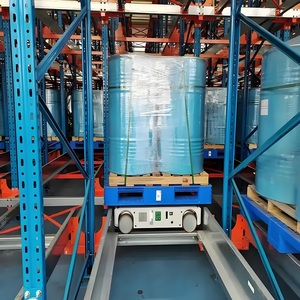
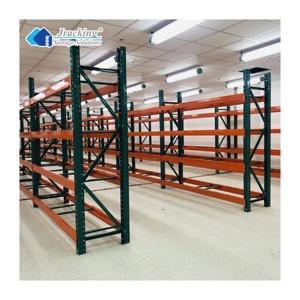
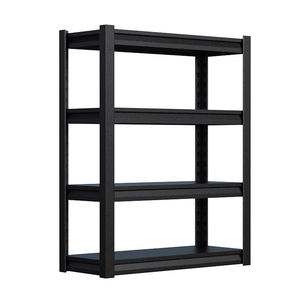
Structural Metallurgy & Automated Storage Racking Design Standards
In high-throughput automated material handling environments, warehouse racking is no longer a passive steel commodity; it is an active mechanical superstructure. As multi-tier automated storage and retrieval systems (AS/RS), stacker cranes, autonomous mobile robots (AMRs), and four-way radio shuttles travel at acceleration rates exceeding 2.0 m/s², the static and dynamic mechanical loads exerted on racking columns require unprecedented structural integrity.
Chinese heavy-duty industrial storage rack manufacturing has evolved from basic cold-roll forming to certified aerospace-grade structural engineering. Using certified Q235B and high-yield Q355B structural steel (equivalent to ASTM A36 and ASTM A572 Grade 50), our automated production facilities apply continuous multi-pass roll-forming to produce closed-tube and deep-channel upright profiles with enhanced moment of inertia. By maintaining column profile straightness within 1/1000 of the total building height and beam pitch punching tolerance within ±0.5 mm across 15-meter single-piece columns, our systems eradicate rail misalignments that cause shuttle jams or automated crane interlocks.
Engineering Imperative: Finite Element Method (FEM) analysis and full-scale dynamic rack push-over simulations are conducted in-house. All load-bearing connections satisfy the rigorous international requirements of ANSI MH16.1 (RMI standard), EN 15512 (European standard), and AS 4084 (Australian steel storage standard), accounting for seismic ground accelerations up to 0.4g.
In addition to standard warehouse environments, heavy-duty industrial storage racks engineered for sub-zero cold-chain facilities (-30°C) utilize specialized low-temperature impact-resistant killed steel alloys. These materials eliminate brittle fracture failure modes under high-frequency forklift and automated shuttle impacts, ensuring twenty-plus years of structural lifecycle reliability without plastic fatigue.
High Impact Torsional Resistance
Closed tubular column geometries provide up to 200 times more torsional resistance than open-back roll-formed columns, drastically reducing accidental forklift collision damage in high-speed distribution centers.
Precision Automated Stacker Crane Tolerances
Fabricated specifically for high-bay rack-clad warehouses up to 40 meters tall, maintaining ultra-strict rail levelness (±1.5mm) across continuous 100-meter operating aisles for uninterrupted crane cycles.
Surface Treatment & Powder Crosslinking
Multi-stage pre-treatment featuring automatic alkaline degreasing, zinc-phosphating, and thermosetting epoxy-polyester powder coating cured at 200°C for exceptional salt-spray and scratch resistance.
Strategic Procurement Trends in Automated Storage Infrastructure
Global supply chain networks face mounting macroeconomic pressures: real estate capital costs continue to escalate, labor shortages constrain manual fulfillment capacity, and SKU velocity demands higher storage density with real-time tracking. Procurement directors across North America, Europe, Southeast Asia, and the Middle East are re-evaluating capital investments with an emphasis on Total Cost of Ownership (TCO) over initial equipment purchase price.
Key procurement shifts defining the next half-decade include:
1. Accelerated Migration to 4-Way Radio Shuttle & Aisle-Changing Automation: Traditional drive-in and deep-reach systems suffer from slow pallet turnaround and excessive forklift racking collisions. Four-way shuttle automation allows flexible, high-density storage where autonomous robotic shuttles traverse both longitudinal and transverse rail tiers, achieving 90%+ warehouse cubic space utilization with zero human equipment traffic inside the rack structure.
2. The Surge of Rack-Supported Clad Buildings (Building-as-a-Rack): Instead of erecting a conventional steel warehouse building and then retrofitting internal racking, enterprise logistics operations increasingly procure rack-supported clad structures. In this architecture, the heavy-duty structural racking forms the load-bearing skeleton that supports the external roof and wall sandwich panels, slashing construction timelines by 30-40% and drastically reducing overall structural steel CAPEX.
3. IoT-Integrated Digital Twins & Real-Time Structural Deflection Monitoring: Modern high-bay installations are deploying embedded optical strain sensors, RFID pallet seating sensors, and load cells directly on main upright columns. These telemetry devices stream continuous mechanical deflection data to cloud-based warehouse management systems (WMS), alerting facilities to localized overloading or sub-structural foundation settlement before catastrophic structural deflection can occur.
| Storage Racking System | Space Efficiency | Pallet Selectivity | Handling Throughput | Automation Readiness | Primary Industrial Use Case |
|---|---|---|---|---|---|
| 4-Way Radio Shuttle AS/RS | 95% Maximum | Channel Dynamic LIFO/FIFO | Very High (Automated) | Native Autonomous | Cold Storage, FMCG, Beverage Distribution |
| Rack-Supported High-Bay AS/RS | 98% Maximum | 100% Direct Selective | Ultra High (Continuous) | Crane Integrated | Automotive, E-Commerce Mega-Hubs, Pharma |
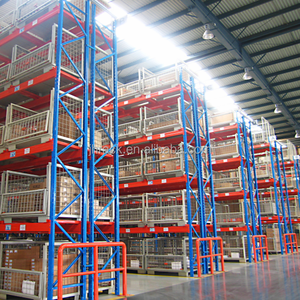
| Heavy Duty Selective Pallet Rack | 40% - 50% | 100% Direct Selective | Moderate (Forklift) | Manual / AGV Ready | General Warehousing, High SKU Velocity |
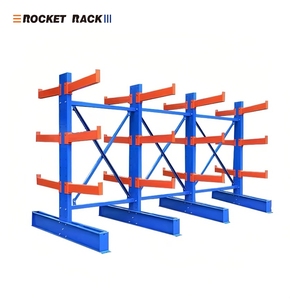
| Heavy Duty Cantilever Coil Rack | 75% Volume | Direct By Arm Level | Specialized Crane/Hoist | Semi-Automated | Steel Sheet Coils, Pipes, Heavy Timber |
| Double Deep Pallet Racking | 60% - 65% | 50% Direct Access | Moderate (Deep Reach) | Manual / Guided Forklift | Multiple Pallets per SKU, Paper & Packaging |
*Engineering note: System capacities must be validated based on floor slab load bearing ratings, soil foundation elasticity, and localized seismic risk accelerations (PGA values).
Why Global EPCs & System Integrators Source from China
China has consolidated its position as the premier manufacturing ecosystem for heavy-duty and automated storage systems. Combining state-of-the-art robotic cold roll-forming capabilities, domestic high-grade steel procurement advantages, and direct access to major international deep-water seaports (Shanghai, Ningbo, Qingdao, Tianjin), Chinese manufacturers provide global EPC contractors and system integrators with unparalleled engineering agility and cost efficiency.
Our integrated manufacturing facilities operate with strict vertical accountability—from raw steel coil ultrasonic testing through fully automated cold-roll forming, robotic laser cutting, continuous automatic welding, shot blasting, and computerized dual-gun powder coating.
Automated Roll Forming
Over 28 high-precision continuous roll-forming lines producing cold-formed uprights and box beams with zero twist, residual stress control, and pinpoint hole alignment.
Robotic Welding Cells
Multi-axis Panasonic and ABB robotic welding cells ensure 100% penetration on beam end-connectors, baseplates, and bracket joints without porosity or thermal distortion.
Shot-Blasting Pre-Treatment
All raw profiles pass through heavy shot-blasting machines to remove surface mill scale and rust to Sa 2.5 cleanliness, ensuring superior coating adhesion and anti-corrosion life.
Export Sea-Packing Rigor
Custom heavy wooden cradles, anti-scratch bubble wraps, corner guards, and steel strapping engineered specifically to resist oceanic vibration and condensation inside 40ft HQ containers.
Furthermore, our engineering teams provide end-to-end technical documentation including 3D BIM/Revit architectural integration models, structural static/dynamic calculation packages stamped by certified engineers, detailed bill-of-materials (BOM) cross-referenced to shipping container manifests, and on-site or remote installation commissioning oversight.
Frequently Asked Questions on Heavy-Duty Automated Racking Procurement
Below are authoritative answers to the primary engineering, compliance, and commercial questions raised by international logistics project managers, procurement directors, and structural consultants.
What steel grades and mill standards are used in heavy-duty automated racks?
We primarily utilize certified hot-rolled steel coils in grades Q235B (yield strength ≥235 MPa) for standard ambient components and high-tensile Q355B (yield strength ≥355 MPa, comparable to European S355JR and American ASTM A572 Gr 50) for critical load-bearing uprights, heavy crossbeams, and high-bay AS/RS systems. Each production batch is certified with official Mill Test Certificates (MTC) detailing chemical composition and mechanical tensile properties.
How do you guarantee geometric tolerance alignment for automated 4-way shuttles?
Automated four-way radio shuttle systems require strict rail tolerance: transverse and longitudinal rail width must not deviate by more than ±1.0 mm, and vertical deflection under full payload must stay within L/500 to prevent shuttle wheel slippage. Our cold roll-forming lines feature multi-axis computerized calibration roll stands and optical laser measuring sensors to verify profile consistency across the entire fabrication cycle.
Can your racking systems withstand high seismic risk zones (e.g., California or Japan)?
Yes. Our engineering department executes static and response-spectrum dynamic seismic analysis using advanced FEA software following international seismic design standards, including ANSI MH16.1, ASCE 7, and Eurocode 8. Based on local peak ground acceleration (PGA) metrics, we incorporate reinforced baseplates, anchor bolt patterns with specialized Hilti chemical anchors, enlarged spine bracing towers, and heavy-duty frame portal ties.
What warehouse floor slab criteria are required prior to installing heavy-duty racking?
Heavy-duty selective and AS/RS racking exert extreme concentrated point loads on concrete floor slabs through baseplates. A typical heavy installation requires a reinforced concrete slab thickness of 200 mm to 300 mm with compressive strength exceeding C25/30 or C30/37. Surface floor levelness should adhere to DIN 18202 Table 3 Group 4 (or ASTM E1155 F-min 75 to 100 for high-bay narrow aisles) to prevent mast tilt.
How do you address corrosion prevention in cold storage or coastal distribution hubs?
For standard humidity operations, our automated electrostatic polyester powder coating provides a durable 60–80 micron protective layer. For sub-zero cold storage facilities experiencing condensation or coastal zones with high salt-air exposure, we offer hot-dip galvanizing according to ISO 1461 / ASTM A123 (65–85 micron zinc alloy envelope) or pre-galvanized high-yield steel coil fabrication to guarantee zero rust over decades of service.
What information is required to receive a customized engineering layout and quotation?
To produce an optimized structural layout and bill of materials, we request: 1) CAD drawings of the warehouse layout showing clear roof height and column positions; 2) Pallet specifications (width, depth, overall height including cargo, and maximum pallet gross weight); 3) Handling equipment type (counterbalance forklift, reach truck, AGV, or automated crane/shuttle); 4) Desired inventory turnover (FIFO vs LIFO); and 5) Local site seismic and environmental parameters.
How are international shipments bundled to avoid container transport damage?
Racking uprights and beams are bundled with high-tensile steel strapping and custom wooden cradles with heavy protective edge boards. Contact surfaces are lined with non-abrasive foam and PE shrink film to prevent paint friction during maritime transit. Hardware components, row spacers, and footplates are packed in heavy-duty reinforced wooden crates, fully tagged with barcode identifiers keyed directly to the installation drawing pack.
Do you provide third-party engineering inspections and installation supervision?
Yes. We routinely collaborate with international inspection agencies such as SGS, TÜV Rheinland, and Bureau Veritas to perform raw material verification, ultrasonic weld testing, and pre-shipment dimensional audits. For construction, we provide complete 3D mechanical assembly manuals and can deploy senior installation supervisors on-site or conduct virtual engineering QA oversight worldwide.