55+
Years Engineering Heritage
100%
In-House Design & Fabrication
EN 15512
CE & RMI ANSI Standardized
6-Deep
High-Density Push Back Lanes
Engineering Portfolio
High-Density & Industrial Storage Assemblies
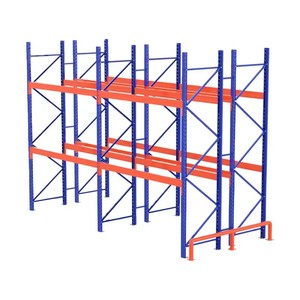
Explore our heavy-duty industrial racking solutions, engineered to international safety standards, built from high-tensile cold-rolled and structural steel channel.
Engineering Whitepaper
Push Back Pallet Racking Mechanics & Information Gain
An in-depth metallurgical and mechanical evaluation of dynamic nested carriage push-back storage systems for operational safety, floor space consolidation, and seismic resilience.
Nested Cart vs. Continuous Roller Mechanics
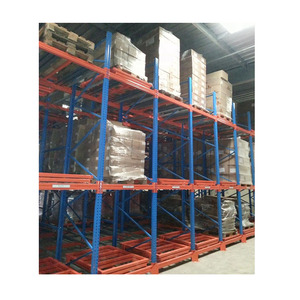
Modern push-back systems rely on nested, linked carriages moving along inclined structural steel rails (typically a 3% to 4% gradient). Unlike continuous skate-wheel gravity flows prone to debris seizing and flat-spot deformation, heavy-gauge steel carts ensure zero mechanical binding and fail-safe return mechanics under extreme sub-zero conditions (-30°C).
Floor Footprint Consolidation Dynamics
Push back pallet systems increase storage density by up to 90% compared to conventional selective racking and over 25% compared to drive-in racks. Eliminating dedicated drive-in forklift aisles substantially mitigates structural collision threats while offering dedicated multi-SKU face presentation across 2-to-6 pallet depths.
Seismic Engineering & CE/EN 15512 Compliance
As certified exporters, our rack structures undergo non-linear static push-over analyses to satisfy EN 15512, RMI MH16.1, and FEM 10.2.02 criteria. Baseplates, anchor bolting, and upright column profiles are tuned to resist localized seismic shear stresses and operational lift-truck impact vectors.
System Benchmarking
High-Density Storage Configurations: Architectural Comparison
Evaluate push-back systems against other major industrial racking configurations to identify the exact storage-density versus access-velocity ratio required for your distribution center.
| Racking Topology | Operational Rotation | Space Utilization | Aisle Collision Risk | SKU Selectivity Index |
|---|---|---|---|---|
| Push Back Racking (Nested Carts) | LIFO (Last-In, First-Out) | 75% – 85% Volumetric Yield | Very Low (Forklift outside lane) | Moderate to High (Per lane face) |
| Drive-In / Drive-Through | LIFO / FIFO | 70% – 80% Volumetric Yield | High (Forklift traverses uprights) | Low (Single SKU per tunnel) |
| Selective Pallet Racking | FIFO (First-In, First-Out) | 40% – 50% Volumetric Yield | Moderate (Multiple wide aisles) | 100% Direct Accessibility |
| Pallet Flow (Gravity Roller) | Strict FIFO | 85% – 90% Volumetric Yield | Low (Dedicated load/pick aisles) | Moderate (Per lane flow) |
| AS/RS High-Bay Structures | Programmed / Automated | 90% – 95% Volumetric Yield | Zero (Fully automated crane) | Dynamic Automation Direct |
Strategic Foresight
Push Back Pallet Racking: Future Procurement & Technology Trends
Technological advancement, energy efficiency mandates, and cold-chain scaling are changing procurement priorities across modern high-density distribution centers.
Thermal Energy Optimization in Cold Storage
Global procurement teams in cold chain and pharmaceutical logistics increasingly utilize 4-deep and 5-deep push back racks to minimize cooled volume overhead. By condensing storage corridors, facilities drop HVAC power consumption by up to 32% per stored pallet load.
Hybrid AGV & Autonomous Reach-Truck Interoperability
Future-ready push-back frames are migrating toward tighter tolerances and laser-guided visual positioning targets. This allows standard automated guided vehicles (AGVs) and autonomous reach-trucks to manipulate nested carts safely without human driver intervention.
Structural Steel Metallurgy vs. Lightweight Cold-Rolled
Specifiers increasingly demand hybrid material configurations: hot-rolled structural steel channel for exposed lower uprights (providing extreme impact tolerance) combined with high-tensile cold-rolled roll-formed carts to balance structural resilience, freight weight, and total cost of ownership.
Manufacturer Authority
Why Enterprise Specifiers & Exporters Partner With Us
Drawing on decades of structural manufacturing heritage, certified engineering excellence, and end-to-end supply chain integration.
Certified Compliance & Engineering Calculations
Every industrial project is certified to rigorous international specifications, including CE, RMI ANSI MH16.1, and EN standards. We provide project-specific finite element analysis (FEA), concrete slab pull-out load validation, and stamped engineering documentation for local building code permits.
Seamless Automated System Integration
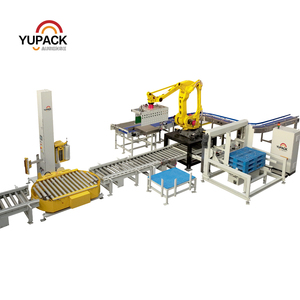
Beyond passive metal shelving, our structural assemblies integrate natively with multi-tier pick modules, cantilever zones, robotic palletizers, stretch-wrapping conveyor networks, and rack-supported Automated Storage and Retrieval Systems (AS/RS).
Export Packaging & Global Commissioning
We pack and containerize racking profiles with custom steel strapping, protective edge boards, and anti-corrosive wrapping for heavy sea freight. Our worldwide distributor and engineering partners oversee on-site assembly, anchor torque testing, and handover inspection.
Procurement Insights
Frequently Asked Questions: Industrial Push Back Systems
Essential answers regarding clearances, weight capacities, cart operations, maintenance regimes, and seismic engineering.
What are the exact pallet dimensions and deflection tolerances for push back carts?
Push-back systems accommodate diverse pallet standards, including GMA (48"x40"), EUR (1200x800mm), and ISO pallets. Carriages are engineered to accept varied bottom board orientations (2-way or 4-way entry). Cart bed structural deflections are kept below L/300 under rated static capacity (typically 1,000 kg to 1,500 kg per pallet position) to eliminate carriage binding during travel.
How does push back racking mitigate forklift impact compared to drive-in racking?
In drive-in racking, lift trucks must enter deep structural channels, frequently causing mast and chassis collisions against uprights. Push-back systems confine forklift operations strictly to the exterior access aisle. Operators simply push existing pallets backwards using the incoming pallet. This eliminates vehicle entry into the structural bay and drastically reduces upright damage, downtime, and personnel safety hazards.
What slope angle is required, and how is dynamic descent velocity controlled?
Push back lanes utilize a gravitational slope between 3% and 4% (approximately 3/8" per foot). Gravity brings nested carts to the pick face as pallets are retrieved. Descent speed is governed directly by the forklift operator during extraction. For deeper 5-deep or 6-deep configurations, safety end-stops and cart push-back dampening bumpers prevent runaway loads and ensure controlled cart sequencing.
Can standard counterbalance or reach trucks service push back systems?
Yes. Standard counterbalance forklifts and moving-mast reach trucks work with push-back lanes without specialized attachments. However, mast tilt capabilities and residual mast capacities at full elevation must account for the force needed to push stored pallets up the 3% gradient.
What documentation and certifications are required for CE-marked export orders?
CE certified shipments include a Declaration of Performance (DoP) under EN 1090-1 / EN 15512, raw steel mill test certificates (EN 10204 Type 3.1), certified weld inspection records, electrostatic powder-coating thickness reports, installation assembly drawings, and clearly legible rated load capacity plaques for every aisle face.
Engineering Your Optimized Warehouse Configuration
Provide your warehouse dimensions, pallet weight profile, and clear ceiling height. Our senior structural storage engineers will prepare a complimentary layout drawing, volumetric utilization analysis, and customized quotation.
Get a Quote