Engineered Industrial Racking & Tire Storage Systems
Select from our standard heavy-duty structural pallet racks, automated warehousing retrieval systems (AS/RS), and specialty cantilever frameworks, all tested under certified static and dynamic loads.
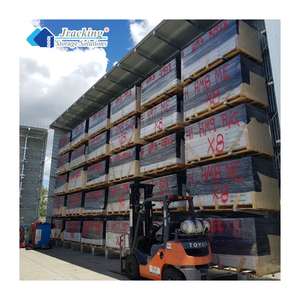
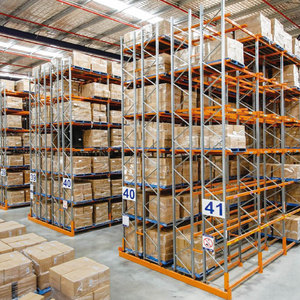
Universal teardrop and structural profile selective pallet racking. Optimized for PCR passenger tire pallet handling and mixed warehouse skus with direct 100% selectivity.
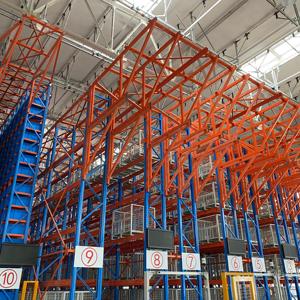
Ultra-precision mill-tolerance uprights built for stacker cranes and pallet shuttle automation in central tire manufacturer distribution hubs and 24/7 fulfillment centers.
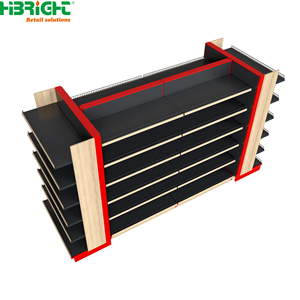
Hot-dip galvanised structural columns engineered for heavy Off-The-Road (OTR), mining equipment, agricultural tractor tires, and bulk tubing exposed to weather.
Automated tier-rack matrices with high structural stability for robotics-guided shuttles, preventing tire bead compression and speeding up tire staging lines.
Full penetration seamless robotic welding seams on connector clips and structural base plates, certified for heavy industrial dynamic racking loads and seismic category zones.
The Structural Engineering of Heavy-Duty Tire Racking Systems
Storing tires at commercial and industrial scales presents physical challenges distinct from conventional dry pallet warehousing. Tires represent high-density, elastic, and non-uniform payloads. When placed incorrectly on substandard racks, tires exert uneven point-loads and localized stress concentrations that compromise horizontal load beams. Moreover, improper support causes permanent bead deformation, casing distortion, and sidewall cracking, destroying inventory value before it leaves the distribution facility.
As a specialized CE-certified tire racking factory and global exporter, our engineering methodology centers on balancing maximum volumetric storage density with the metallurgical and structural parameters outlined in EN 15512:2020 (European standard for steel static storage systems), FEM 10.2.02, and the RMI (Rack Manufacturers Institute) ANSI MH16.1 specifications. Utilizing high-tensile hot-rolled and cold-formed structural steel grades (specifically Q235B and Q355B, equivalent to ASTM A36 and S355JR respectively), our frameworks are built to withstand severe static loads while maintaining structural stability under seismic excitation.
Critical Engineering Rule: Tire racking systems must never rely on standard flat pallet decking without specialized beam profiles. In direct vertical tire placement (tread-down), the beam profile must feature an angled tire-stop or custom tubular step contour that cradles the tire circumference across at least 15% of its rolling diameter. This prevents bead bending and satisfies structural static deflection thresholds (strictly restricted to $L/250$ to $L/300$, exceeding the nominal $L/200$ building tolerance).
Depending on SKU velocity and forklift fleet kinematics, tire storage configurations fall into four distinct operational categories:
Vertical Tread Stacking
Tires stand vertically on paired parallel cross-beams. Enables instant manual or turret-truck access per tire without disturbing adjacent inventory. Ideal for fast-turnover PCR (Passenger Car Radial) retail order picking.
Horizontal (Laced) Stacking
Tires are interlaced flat in herringbone or basket-weave patterns on heavy-duty pallet bases. Delivers 25% higher cube utilization in long-term transit warehouses, requiring structural column guard rails to counter high dead-weight inertia.
Double Deep & Drive-In
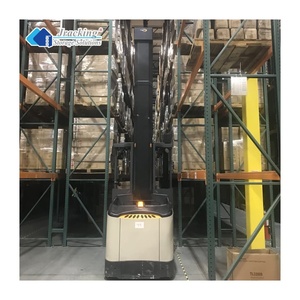
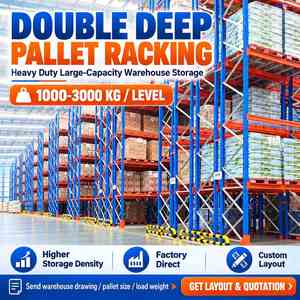
Accommodates bulk batches of identical SKUs. Eliminates operating aisles by allowing deep-reach pantograph trucks or drive-in forklifts to deposit whole pallets of TBR (Truck, Bus & Radial) stock directly onto cantilevered guide rails.
AS/RS Automated Shuttle
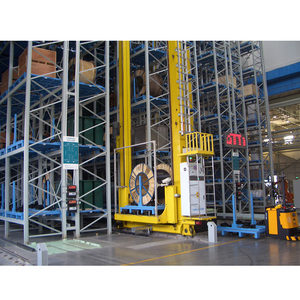
High-bay automated storage racking running rail-guided shuttles up to 30 meters high. Reduces human footprint, accelerates staging cycles, and integrates with factory WMS for automated FIFO tire batch age traceability.
System Selection Matrix: Technical Specifications by Tire Class
To assist logistics directors and warehouse planners in selecting the correct structural configuration, our engineering team has summarized load limitations, steel grades, upright frame profiles, and deflection tolerances based on tire class requirements:
Racking System Type
Applicable Tire Class
Standard Bay Width
Frame Depth (mm)
Max Load / Level
Safety Factor
Finishing Standard
Selective Tire Beam Rack
PCR / Light SUV / Moto
2300mm – 2700mm
450mm – 600mm
1,200 – 2,500 kg
1.67 (ANSI MH16.1)
Epoxy Powder 60-80μm
Double Deep Heavy Rack
TBR / Commercial Bus
2700mm – 3300mm
1000mm – 1200mm
2,500 – 4,500 kg
1.80 (EN 15512)
Thermoset Hybrid Powder
Structural I-Beam Cantilever
OTR / Earthmover / Ag
Custom Post Spacing
1200mm – 1800mm
5,000 – 12,000 kg
2.00 (Structural AISC)
Hot-Dip Galv (ISO 1461)
Automated AS/RS High-Bay
Mixed OEM Batch Hubs
1800mm – 2400mm
800mm – 1200mm
1,500 – 3,000 kg
1.75 (FEM 10.2.02)
Precision Duplex Powder
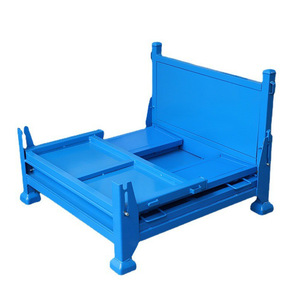
Stacking Post Pallets (Manurack)
Intermodal PCR / TBR
1500mm – 2200mm
1100mm – 1500mm
1,000 – 2,000 kg
1.85 (Static/Dynamic)
Zinc Electroplate / Powder
*Note: All custom spans can be engineered with specific moment-resistant baseplates and chemical anchor bolt arrangements depending on municipal seismic acceleration coefficients ($S_s$ and $S_1$).
Future Procurement Trends in Heavy-Duty Industrial Tire Storage
The tire storage supply chain is undergoing profound structural shifts driven by global e-commerce demands, the rapid mass-adoption of Electric Vehicles (EVs), regional logistics nearshoring, and stringent worker safety regulations. Procurement teams looking forward to 2025–2030 must design warehouse architectures that accommodate these long-term industry trends:
1. EV Tire Weight Adjustments
Electric vehicle tires weigh 15% to 25% more than equivalent internal combustion engine tires due to reinforced sidewalls, acoustic foam inserts, and battery weight demands. Traditional rack capacity calculations are no longer adequate. Procurement specifications now mandate higher steel yield points (upgrading from Q235 to Q355B) and heavy-gauge column uprights to avoid structural fatigue over 10-year operating lifecycles.
2. Shift to Robotic Pick & AS/RS Shuttles
Manual handling of commercial TBR tires poses significant ergonomic injury liability under European and North American occupational health frameworks (OSHA, EU-OSHA). Tier-1 tire distributors are aggressively reallocating capital expenditure into automated pallet-shuttle racking systems and high-density AS/RS stacks that eliminate human forklift operations inside narrow tire aisles.
3. Strict CE & EN 1090 Traceability
Regulatory authorities in the European Union and the UK now demand complete structural traceability for all load-bearing metal structures under the CPR (Construction Products Regulation) and EN 1090-1/2 execution classes. Global procurement officers must verify that tire racking manufacturers supply continuous factory production control (FPC) certificates and 3.1 steel mill inspection certificates.
Strategic Purchasing Insight: The total cost of ownership (TCO) in industrial racking is dominated not by the initial factory FOB steel price, but by installation efficiency, operational damage tolerance, and seismic certification longevity. Specifying closed tubular uprights or roll-formed channels with heavy-gauge bottom footings reduces forklift impact damage costs by up to 60% over a 7-year audit cycle.
Manufacturing Innovations: The Evolution of Industrial Rack Fabrication
Modern tire warehouse logistics requires zero-tolerance manufacturing accuracy. As racking spans rise above 12 meters in automated high-bay distribution terminals, millimeters of fabrication deviation can cause cumulative out-of-plumb vertical errors that derail automated shuttle cranes. Our manufacturing facilities incorporate the latest advances in roll-forming metallurgy and robotic automation:
Continuous Roll-Forming Lines
Multi-station automated roll-forming equipment shapes cold-rolled steel coils into complex omega and tubular upright geometries in continuous passes. This work-hardens the steel corners, delivering superior torsional resistance against twisting compared to conventional pressed channel sections.
Robotic Laser & MIG Welding
Precision multi-axis robotic welding cells execute seamless MIG/MAG joints on beam end connectors and heavy base plates. Automated penetration-depth monitoring eliminates human weld inconsistency, bubble cavities, and slag inclusions that could fail under dynamic forklift impact.
Advanced Powder & Galvanizing
Multi-stage automated surface pre-treatment (iron phosphate wash, ultrasonic degreasing, clean demineralized rinse) followed by thermosetting electrostatic epoxy-polyester coating baked at 200°C. For aggressive exterior environments, full hot-dip galvanizing complies with ISO 1461, guaranteeing 20+ years of rust prevention.
Why Global Distributors Rely On Our Factory
Combining 50+ years of manufacturing lineage, state-of-the-art production capacity, and rigorous export engineering verification to safeguard every high-bay warehouse investment.
Single-Source Engineering
From primary architectural CAD/BIM modeling and structural calculation sheets to cold-forming, robotic welding, and finishing—every component originates within our unified manufacturing campus, ensuring zero multi-vendor finger-pointing.
Certified Load & Seismic Testing
We maintain an in-house static load-testing laboratory equipped with high-precision hydraulic ram actuators. We verify ultimate yield points, deflection curves, and cyclic connector stiffness to satisfy RMI ANSI MH16.1 and EN 15512 safety factors.
Export Logistics Engineering
Intercontinental transport subjects steel to humidity, sea salt spray, and vibration damage. All export orders feature custom heavy-duty steel dunnage, vapor-corrosion inhibitor (VCI) shrink wrap, and corner protectors optimized for standard 40ft HQ container de-stuffing.
Modular & Custom Profiles
Whether your warehouse runs European EUR-pallets, standard American 48x40-inch tire skids, or oversized OTR mining casings up to 4 meters in diameter, our tooling workshop manufactures customized beam lengths and specialized tire-cradle attachments.
Global Dealer & Partner Support
We empower our overseas distributors and warehouse integrators with full tender submittal packages, seismic stamped calculations, 3D DWG/Revit models, and multi-lingual on-site installation guidance manuals.
Audit-Ready Compliance
CE Factory Production Control (FPC) certified according to EN 1090-1 execution class EXC2/EXC3. Complete traceability of raw material melt chemistry, tensile coupons, and Charpy impact tests for every production run.
Procurement Knowledge Base
Frequently Asked Questions on Heavy-Duty Tire Racking
Direct answers from our structural engineers to common questions regarding CE certification, deflection calculations, fire codes, and overseas logistics.
What specific European standards govern CE marking for industrial tire racking systems?▼
Industrial steel storage racks installed within the European Union fall under the Construction Products Regulation (CPR 305/2011) when classified as building-integrated structural frameworks, requiring compliance with EN 1090-1 and EN 1090-2 (Execution of steel structures). For free-standing adjustable pallet racking, structural calculations are governed by EN 15512:2020 (Principles for structural design), EN 15620 (Tolerances, deformations and clearances), and EN 15635 (Application and maintenance of storage equipment). Our export shipments include complete Declaration of Performance (DoP) documentation and mill test certs matching EN 10204 Type 3.1.
How do you prevent tire bead distortion and flat-spotting in multi-tier rack systems?▼
Flat-spotting and bead deformation occur when tires rest on sharp structural beam edges or are subjected to point loads over extended holding periods. We solve this by engineering specialized tire beams: (1) Custom chamfered tubular step-beams that distribute radial contact pressure across a 45-degree tangent plane, or (2) Removable saddle tubes positioned between cross-beams. For high-end radial tires and motorsport inventory, we recommend rotating the tires 90 degrees every 90 to 120 days or opting for our horizontal cradle stacking pallets.
What are the maximum vertical deflection limits allowed for heavy tire beams?▼
Under RMI ANSI MH16.1 and EN 15512 specifications, nominal elastic beam deflection under maximum working design load must not exceed $L/200$, where $L$ is the clear span distance between upright columns. However, for tire storage applications—due to the dynamic surging of forklifts during loading and the risk of tires wedging into deformed beam beds—our factory designs heavy-duty tire beams to a much tighter limit of $L/250$ to $L/300$. This ensures smooth forklift tine clearance and long-term joint integrity.
What floor slab specifications (concrete PSI and thickness) are required for heavy-duty tire racks?▼
For standard 4 to 6-meter selective tire racks carrying loads up to 3,000 kg per level, a reinforced concrete floor slab with a minimum compressive strength of 3,000 to 4,000 PSI (20 to 28 MPa) and a thickness of 150mm to 200mm is typically recommended. For high-bay AS/RS systems reaching heights of 15 to 30 meters, slabs must be engineered to 4,500+ PSI with post-tensioned reinforcement and super-flat surface tolerances conforming to DIN 18202 or ASTM E1155 (F-min ratings) to prevent high-speed crane vibration.
How does tire storage density impact warehouse fire protection and in-rack sprinkler design?▼
Rubber tires are classified under NFPA 13 (Standard for the Installation of Sprinkler Systems) and EN 12845 as high-hazard commodities due to their rapid heat-release rate, intense hydrocarbon smoke production, and tendency to shed water when stacked vertically. Storage heights exceeding 1.5 meters require dedicated Early Suppression Fast Response (ESFR) ceiling sprinklers or multi-tier in-rack sprinkler barriers with horizontal steel baffles to contain thermal updrafts. Our engineers design racking frames with laser-cut conduit penetrations to accommodate in-rack sprinkler piping without weakening the structural capacity of the upright columns.
How do you protect overseas export shipments against maritime corrosion and transit impact?▼
All structural steel components shipped via ocean freight undergo a three-layer export packaging protocol: First, beam connectors and column ends are fitted with high-density polyethylene edge protectors. Second, steel bundles are strapped with heavy polyester cords to prevent metal-to-metal rubbing that could chip the powder coat. Third, bundles are wrapped in industrial-grade multi-layer stretch film embedded with Vapor Corrosion Inhibitors (VCI) to neutralize ocean humidity and salt air throughout voyages lasting 30 to 60 days.
Ready to Engineer Your High-Density Tire Warehouse?
Consult with our senior structural storage engineers today. We provide full layout schematics, static load calculation sheets, seismic validation, and direct competitive factory quotations within 24 hours.