Engineered Industrial Stillage & Storage Configurations
Certified heavy-duty fabrications built with Q235B/Q355B cold-formed and hot-rolled profiles, optimized for high dynamic fatigue resistance and multi-tier density.
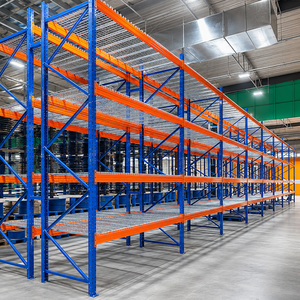
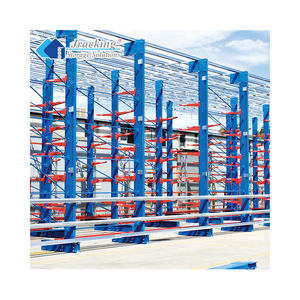
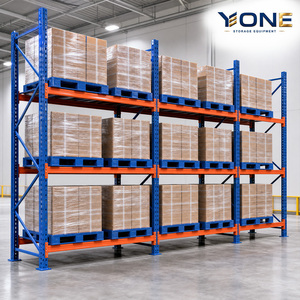
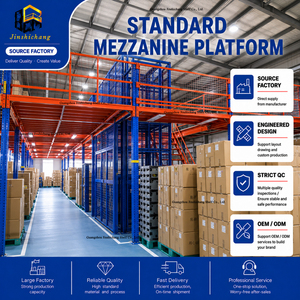
In modern supply chain infrastructure, CE Certified Heavy Duty Stillage Racks serve as crucial structural units bridging storage density, modular intermodal mobility, and mechanical handling safety. Sourcing from certified manufacturing plants requires precise structural qualification, finite element validation, and standardized production methodology to safeguard against operational catastrophic shear failures.
Unlike ordinary static shelving, industrial steel stillages and post pallets undergo continuous cyclic dynamic stress during forklift transport, truck transit, and multi-tier stack loading. CE conformity under EN 1090-1 (Execution of steel structures) and EN ISO 3834-2 mandates that structural load-bearing components utilize verified certified steel coils—typically S235JR, S355JR, or equivalent cold-rolled Q235B/Q355B structural grades. The integrity of the stillage depends on its cup-foot (target locator) design, stacking post wall thickness (minimum 2.5mm to 4.0mm for heavy payloads), and the weld penetration index across base junctions.
Structural Finite Element Analysis
Every customized stillage geometry undergoes computerized FEA testing to simulate extreme stack offsets, localized forklift prong puncture loads, and high-tier horizontal seismic wind or inertial loads.
Automated Robotic Seam Welding
Robotic pulse MAG welding setups eliminate weld spatter and lack-of-fusion defects, assuring 100% full-fillet penetration at critical junction gussets and load-bearing corner collars.
High-Adhesion Surface Protection
Advanced shot-blasting to Sa 2.5 profile followed by thermosetting epoxy-polyester architectural powder coating ensures high salt-spray resistance (up to 500 hours) for outdoor and harsh intra-logistics handling.
Selecting the appropriate stillage format relies on structural volume, crane/forklift access parameters, and whether closed containment or selective profile racking is needed. The matrix below contrasts typical industrial models for international procurement officers:
| Stillage Category | Typical Payload / Unit | Max Stack Tier | Primary Sector Application | Conformity Criteria |
|---|---|---|---|---|
| Heavy Duty Post Pallets | 1,000 kg – 2,500 kg | 1 + 4 High | Automotive sub-assemblies, forging, casting | EN 1090, ISO 3834, CE Mark |
| Collapsible Mesh Box Stillages | 800 kg – 1,500 kg | 1 + 3 High | Tier-1 Distribution, returnable reverse logistics | DIN 15155, UIC 435-3 |
| Cantilever / Bar Stillage | 1,500 kg – 3,500 kg | 1 + 3 High | Steel pipes, extrusions, structural profiles | ANSI MH16.1, FEM 10.2.02 |
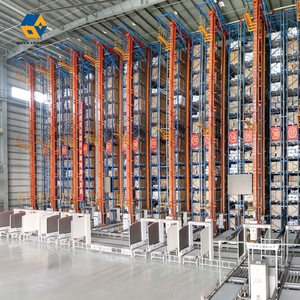
| ASRS-Compatible Steel Skids | 500 kg – 1,200 kg | Multi-Bay High Bay | Automated shuttles, high-density miniload | FEM 9.831 (ASRS Interface) |
The international supply chain is transitioning from traditional disposable wooden packaging to circular returnable steel stillage networks. Forward-thinking procurement teams assess four overarching structural and economic trends:
Integrated RFID & IoT Asset Tracking
Global supply loops necessitate real-time asset visibility. Advanced stillage units feature recessed, protected cavities for active Bluetooth Low Energy (BLE) or RFID tags to streamline yard and warehouse auditing.
High Fold-Down Return Ratios
Freight logistics costs necessitate hyper-optimized collapsible engineering. Modern stillages deliver up to a 1:4 or 1:5 folding ratio, maximizing empty return volumes within standard 40ft High Cube containers.
AGV & AMR Interface Standardization
Automated guided vehicles require tight base deflection tolerances (±1.5mm) and standardized chamfered fork entry channels, eliminating jamming in lights-out manufacturing environments.
From a Total Cost of Ownership (TCO) evaluation, investing in heavy-duty welded stillage systems yields distinct capital advantages compared to disposable skids or lightweight unstiffened sheet metal bins. Stillage structures manufactured with continuous seam welds, hot-dip galvanization (HDG), or high-tensile structural tube posts typically achieve service lifespans exceeding 10 to 15 years in intensive 3-shift operational cycles. When combined with standardized maintenance protocols and regular NDT (non-destructive testing) of primary load welds, stillages effectively eradicate product damage, reduce cargo shifting in multi-modal transit, and lower insurance underwriting liabilities.
As a dedicated single-source manufacturing exporter, we integrate metallurgical selection, robotic forming, full-scale batch proof testing, and dedicated export logistics coordination under one ISO 9001 and CE-certified roof.
Rigorous CE & ISO Protocols
Certified factory production control conforming to EN 1090 execution classes (EXC2/EXC3) guarantees complete metallurgical traceability from mill test certificates (MTC) to final shipping tags.
100% In-House Tooling & Customization
Our dedicated mold and stamping tooling teams adapt stillage layouts, drop-down gates, internal polyurea protective lining, and dunnage mounts to match your exact component geometry.
Container Stacking Optimization
Our export shipping engineering team models packaging schematics in 3D to ensure every sea-container (20GP, 40HQ) achieves maximum cubic efficiency and secure, non-shifting transit blocking.
Complete Structural Documentation
Every international shipment is accompanied by complete dynamic calculation packets, raw material compliance documentation, coating thickness verification, and weld NDT inspection summaries.
Frequently Asked Sourcing & Engineering Questions
Clear technical answers covering certification, load limits, customizations, and international freight guidelines.
CE marking for stillages under EN 1090-1 and the Construction Products Regulation (CPR) validates that raw materials comply with EU harmonized standards, welders are qualified to EN ISO 9606-1, welding procedures are approved via WPQR, and structural calculations reflect safety factor margins under static and dynamic loading.
Calculations account for the gross bottom unit load (e.g., 4 x 1,500 kg = 6,000 kg resting on the lowest stillage base), incorporating dynamic safety factors (typically 2.0 to 3.0), structural eccentricity offsets of ±20mm, and column buckling resistance based on the Euler formula and Eurocode 3 standards.
For outdoor yards, intermodal open transit, or coastal logistics, Hot-Dip Galvanizing (HDG) compliant with ISO 1461 (minimum 70-85 μm zinc layer) is recommended. Alternatively, a dual-layer epoxy-zinc rich primer topped with architectural polyester powder coating provides balanced cost-performance.
Yes. We regularly design custom fabrications featuring laser-cut polyurethane plates, high-density polyethylene (HDPE) profiles, carpet linings, and pivoting retaining arms to prevent metal-to-metal contact on critical painted exterior panels, powertrain gears, and subassemblies.