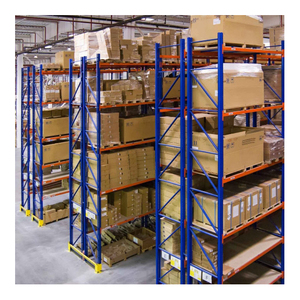
Engineered Industrial Rack Portfolio
Precision-manufactured structural channels, dynamic shuttle systems, and heavy-duty storage configurations tested under rigorous structural safety standards.
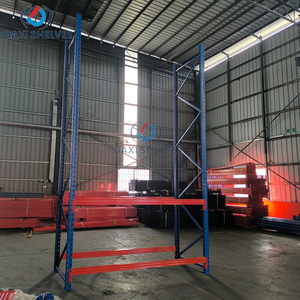
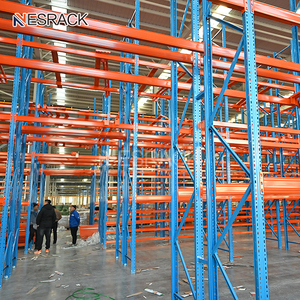
1. Structural Principles of CE Certified Drive-In Racking
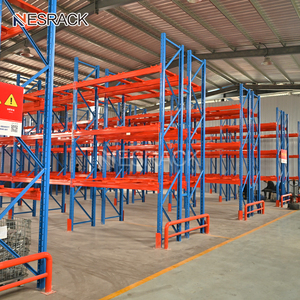
In contemporary high-throughput logistics, conventional selective racks leave nearly 60% of facility footprint dedicated purely to aisle transit. A CE Certified Heavy Duty Drive In Racking framework operates on the continuous lane principle, eliminating inter-row operating corridors to condense multiple pallet positions into unified horizontal tunnels. By allowing counterbalanced or reach trucks to enter directly into rack bays, volumetric storage density jumps to unmatched industrial levels.
Compliance with European standards (EN 15512, EN 15620, and EN 15635) requires acute structural vigilance. Because Drive-In frameworks forfeit the transversal cross-beam stabilization present in selective configurations, lateral deflection and sway forces must be neutralized through upper tie-beams, roof top-bracing plans, and rear portal vertical bracing. Our manufacturing methodology applies heavy-duty roll-formed omega upright profiles alongside hot-rolled structural C-channels, ensuring elastic-limit resilience against equipment impacts.
| Evaluation Parameter | Standard Selective Pallet Rack | Heavy-Duty Drive-In Racking System | Automated 4-Way Radio Shuttle |
|---|---|---|---|
| Cubic Volume Utilization | 40% – 45% of total warehouse space | 75% – 85% maximum density | 85% – 90% optimized density |
| Inventory Flow Principle | Universal 100% Selectivity (FIFO/LIFO) | Strict LIFO (Drive-In) / FIFO (Drive-Thru) | Flexible Automated FIFO & LIFO |
| Initial Capital Expenditure (CapEx) | Baseline Economy Tier | Cost-Effective Heavy Industrial Density | High Tier (Robotics + Automation) |
| Forklift Penetration Risk | Negligible (External operating aisle) | Managed via Ground Rails & Upright Guarding | Zero Internal Mast Ingress |
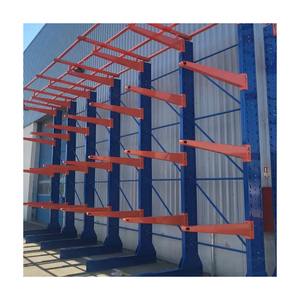
The cantilevered support arms and longitudinal pallet rails are formed with self-locating tapered brackets. This structural connection distributes dead weight and dynamic loads directly into cold-formed multi-ribbed uprights without causing local shear concentrations, mitigating micro-fissure propagation under continuous cold storage cycles.
2. Future Procurement Trends: Cold Chain Consolidation & ESG Standards
Industrial warehousing is encountering a fundamental paradigm shift driven by urban real estate inflation and refrigerated supply chain expansion. Cold chain distribution centers (operating at -25°C to -30°C) experience intense thermal operating expense; every cubic meter of unutilized cold air manifests as direct power dissipation. As a consequence, procurement directors in 2025–2030 are heavily prioritizing ultra-dense drive-in topologies to compress thermal envelopes.
Structural Decarbonization
Global procurement standards now require Life Cycle Assessment (LCA) declarations. Facilities mandate eco-friendly electrostatic powder coatings devoid of volatile organic compounds (VOCs) and cold-formed steels with recycled scrap shares exceeding 25%.
Hybrid Shuttle Adaptation
Traditional drive-in lanes are engineered with dual-purpose geometries allowing bolt-on conversion to automated pallet shuttle channels without total infrastructure demolition as warehouse throughput demands expand.
Seismic Resilience Verification
Driven by harmonized international building codes (UBC, IBC, and EN 1998 Eurocode 8), structural drive-in racks are subjected to finite element nonlinear time-history seismic analyses to avoid collapse under longitudinal seismic oscillation.
3. Technological Evolution: Sensor Integration and Metallurgical Longevity
The mechanical architecture of drive-in racking is advancing beyond passive steel fabrication into high-precision structural assemblies. Historically, forklift collision damage within deep drive-in tunnels represented the foremost operational liability. Today, leading manufacturers deploy three progressive structural advancements:
1. High-Tensile Micro-Alloy Steels: Transitioning from conventional carbon steels to boron- and vanadium-treated micro-alloys increases yield strength from 235 MPa up to 355–420 MPa while preserving cold-temperature ductility. This ensures profiles absorb localized pallet impacts in freezing environments without brittle shearing.
2. Continuous Self-Centering Floor Guide Rails: Engineered hot-rolled structural steel channels anchored along tunnel perimeters serve as mechanical guides for material handling equipment. By restricting lateral forklift deviation to millimeter tolerances, drivers navigate high-bay tunnels at faster speeds without contacting upright frames.
3. Smart Acoustic Emission Load Monitoring: Racking assemblies operating in high-risk seismic or automated environments are increasingly paired with embedded fiber-optic or piezoelectric sensors. These units monitor dynamic structural sway and provide immediate alarms if an upright experiences permanent plastic deformation beyond EN 15635 thresholds.
4. Manufacturing Capabilities & Quality Engineering
Our manufacturing facilities represent decades of dedicated industrial storage engineering. Every racking profile is produced under a continuous Quality Management System certified to ISO 9001 and CE marking standards, guaranteeing complete traceability from raw hot-rolled coils through to final installation sign-off.
Single-Source Accountability
In-house roll forming, robotic welding, shot blasting, and automated powder coating eliminate outsourced tolerance variations.
Certified EN/RMI Compliance
Third-party validated load curves verified according to RMI ANSI MH16.1 specifications and European EN 15512 static calculations.
Heavy Impact Resistance
Heavy-gauge structural channel steel or closed tubular column configurations offer up to 400% higher torsional resistance against fork truck impacts.
Global Project Deployment
Turnkey overseas packaging, international customs documentation, dynamic logistics coordination, and certified installation engineering.
Procurement Knowledgebase
Frequently Asked Questions for Project Directors
Expert insights covering structural engineering, building codes, and installation variables for drive-in storage installations.
What distinguishes CE Certified Drive-In Racks from uncertified industrial alternatives?
CE marking under Construction Products Regulation (CPR 305/2011/EU) verifies that the racking structure complies with harmonized structural performance metrics (such as EN 1090-1 execution for steel structures and EN 15512 design criteria). This mandates mill-certified steel traceability, documented weld inspections, verified load tables, and factory production control audits. Non-certified racking poses substantial regulatory, insurance, and worker safety risks in modern facilities.
How do warehouse planners choose between Drive-In and Drive-Through designs?
The decision is dictated by stock turnover policies. Drive-In racking utilizes a single entry/exit face operating on Last-In, First-Out (LIFO) sequencing, making it ideal for identical-SKU goods with low perishability. Drive-Through configurations require dual operating aisles allowing material entry on one side and retrieval on the other (First-In, First-Out / FIFO). However, Drive-Through systems sacrifice structural rear-diagonal bracing, demanding additional top-tie portals and floor engineering.
What concrete slab specifications are needed for heavy-duty drive-in installations?
Due to concentrated point loads transmitted through upright baseplates, slabs typically require high-strength concrete (minimum C20/25 or C25/30 compressive rating) with a thickness ranging between 180mm and 250mm, reinforced with steel rebar meshes. Floor flatness must adhere strictly to DIN 18202 Table 3 or EN 15620 standards to prevent high-reach mast oscillations as forklifts enter multi-tier storage tunnels.
What strategies mitigate forklift impact damage inside high-bay tunnels?
Effective protection incorporates heavy-duty floor-mounted structural guide rails, wrap-around column protectors fabricated from 5mm structural plate, and tapered lead-in entry shoes. In addition, our upright designs integrate heavy reinforcement sleeves extending 1000mm up the lower leg to absorb repeated scraping and direct impact from truck chassis without buckling load-bearing frame sections.
Can drive-in racking accommodate variable pallet styles and clearances?
Yes. Pallet support rails can be designed with multi-width landing faces to accept standard Euro pallets (1200x800mm), industrial ISO pallets (1200x1000mm), and non-standard skids. Critical clearances require careful specification: pallet bottom boards must span rails symmetrically with a minimum 50mm continuous overlap, while top loads must maintain adequate vertical clearance to prevent catching the support arms above during lift movements.
Configure Your High-Density Storage Project
Partner with certified storage engineers to receive comprehensive finite-element calculations, building code evaluations, and custom AutoCAD layout schemes tailored to your pallet inventory profiles.